
Humans being bored by steady state
This week: Data agents, supply chain visibility, nurturing breakthroughs, mixture-of-recursions, governing online goods
Data Agents
Aren’t we all?

“The dataset uses real Kaggle notebooks processed through a multi-stage pipeline to de-duplicate, fetch referenced datasets, score educational quality, filter to data-analysis–relevant content, generate dataset-grounded question–answer (QA) pairs, and produce executable reasoning traces by running notebooks. The resulting examples include natural questions about a dataset/notebook, verified answers, and step-by-step execution traces suitable for agent training.”
“The dataset contains in total 51389 synthetic notebooks, which amounts to ~2B training tokens. The dataset is provided in two subsets - thinking and non-thinking, where the code generation thinking commentary is wrapped with or without thinkinng tags, depending on base model type. We provide both subsets for convenince and ability to use the dataset for fine-tuning out-of-the-box.”
https://huggingface.co/datasets/data-agents/jupyter-agent-dataset
Enhancing supply chain visibility with knowledge graphs and large language models
Towards a more strategic ecosystem analytics
“This paper presents a novel framework leveraging Knowledge Graphs (KGs) and Large Language Models (LLMs) to enhance supply chain visibility without relying on direct stakeholder information sharing. Our zero-shot, LLM-driven approach automates the extraction of supply chain information from diverse public sources and constructs KGs to capture complex interdependencies between supply chain entities. We employ zero-shot prompting for Named Entity Recognition (NER) and Relation Extraction (RE) tasks, eliminating the need for extensive domain-specific training. We validate the framework with a case study on electric vehicle supply chains, focusing on tracking critical minerals for battery manufacturing.”
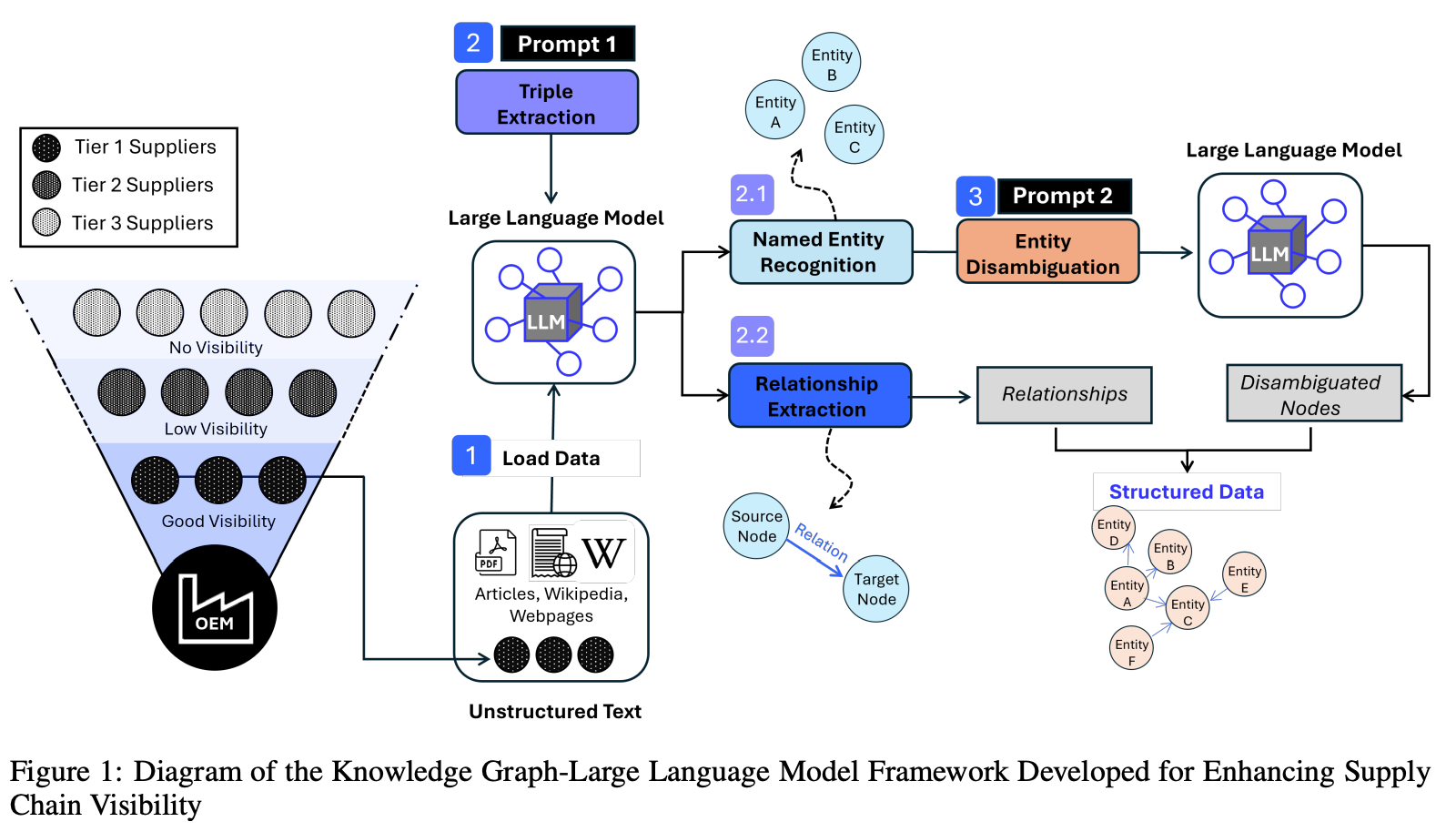
“The ability of decision-makers to extract understanding from the framework needs to be validated through further use cases.”
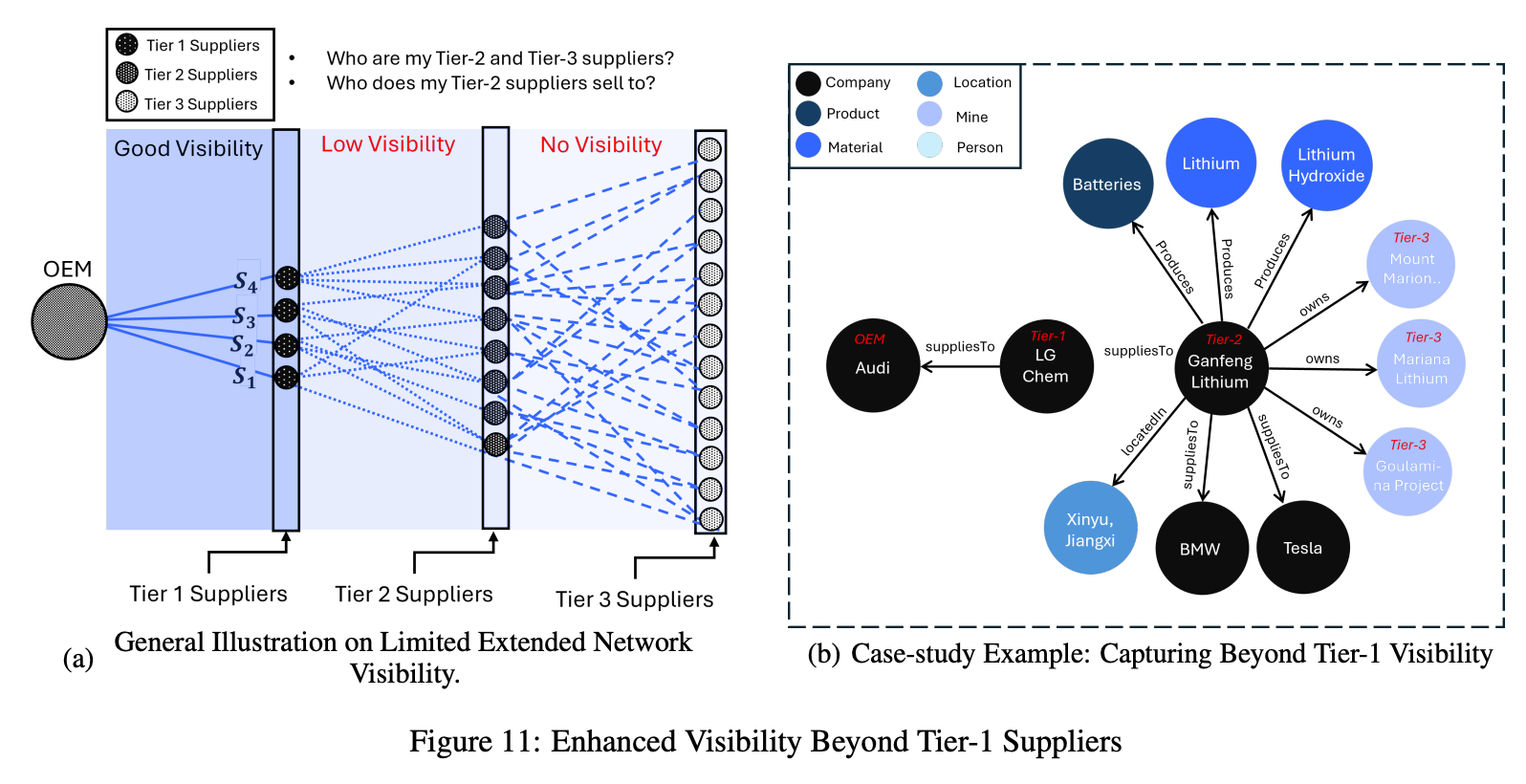
“The data supporting the findings of this study were derived from publicly available Wikipedia pages. These pages were used as resources to feed into the framework for extracting nodes and links. All Wikipedia pages utilized in this study are accessible online.”
AlMahri, S., Xu, L., & Brintrup, A. (2024). Enhancing supply chain visibility with knowledge graphs and large language models. arXiv preprint arXiv:2408.07705.
https://arxiv.org/pdf/2408.07705
Nurturing breakthroughs: lessons from complexity theory
Yeah, so, what else is new?
“A general theory of innovation and progress in human society is outlined, based on the combat between two opposite forces (conservatism/inertia and speculative herding “bubble” behavior). We contend that human affairs are characterized by ubiquitous “bubbles”, which involve huge risks which would not otherwise be taken using standard cost/benefit analysis. Bubbles result from self-reinforcing positive feedbacks.”
“…most systems are punctuated by rare but large events which often dominate their organization. The progress of science and technology is no exception, as innovations, discoveries, blockbusters are exceptional events in their impact. This statement can be quantified by heavy-tailed distributions.”
“The third part documents the phenomenon that I coin “breakdown of the human Galilean invariance principle”, namely that humans being bored by steady state tend to act to develop intermittent accelerating outcomes…I propose that “bubbles” are generic results of collective human activities and that they seem to be not only inherently associated with human societies but are also a vehicle of giant leaps in progress.”
“Human beings like to believe they are in control of their destiny. This ubiquitous trait seems to increase motivation and persistence, and is probably evolutionarily adaptive. The success of science and technology, with the development of ever more sophisticated computerized integrated sensors in the biological, environmental and social sciences, illustrate the quest for control as a universal endeavor. The exercise of governmental authority, the managing of the economy, the regulation of financial markets, the management of corporations, and the attempt to master natural resources, control natural forces and influence environmental factors all arise from this quest.”
“Our robust message is that, under bounded rationality, the simple (large-entropy) strategies are often to be preferred over more complex elaborated (low-entropy) strategies. This is a message that should appeal to managers and practitioners, who are wellaware in their everyday practice that simple solutions are preferable to complex ones, in the presence of the ubiquitous uncertainty. More examples should be easy to find. For instance, control algorithms, which employ optimal parameter estimation based on past observations, have been shown to generate broad power law distributions of fluctuations and of their corresponding corrections in the control process, suggesting that, in certain situations, uncertainty and risk may be amplified by optimal control. In the same spirit, more quality control in code development often decreases the overall quality which itself spurs more quality control leading to a vicious circle.”
Sornette, D. (2008). Nurturing breakthroughs: lessons from complexity theory. Journal of Economic Interaction and Coordination, 3(2), 165-181.
https://arxiv.org/pdf/0706.1839
Mixture-of-Recursions: Learning Dynamic Recursive Depths for Adaptive Token-Level Computation
And it generalizes to multiple mediums!
“We introduce Mixture-of-Recursions (MoR), a unified framework that combines the two axes of efficiency inside a single Recursive Transformer. MoR reuses a shared stack of layers across recursion steps to achieve parameter efficiency, while lightweight routers enable adaptive token-level thinking by dynamically assigning different recursion depths to individual tokens. This allows MoR to focus quadratic attention computation only among tokens still active at a given recursion depth, further improving memory access efficiency by selectively caching only their key-value pairs. Beyond these core mechanisms, we also propose a KV sharing variant that reuses KV pairs from the first recursion, specifically designed to decrease prefill latency and memory footprint.”
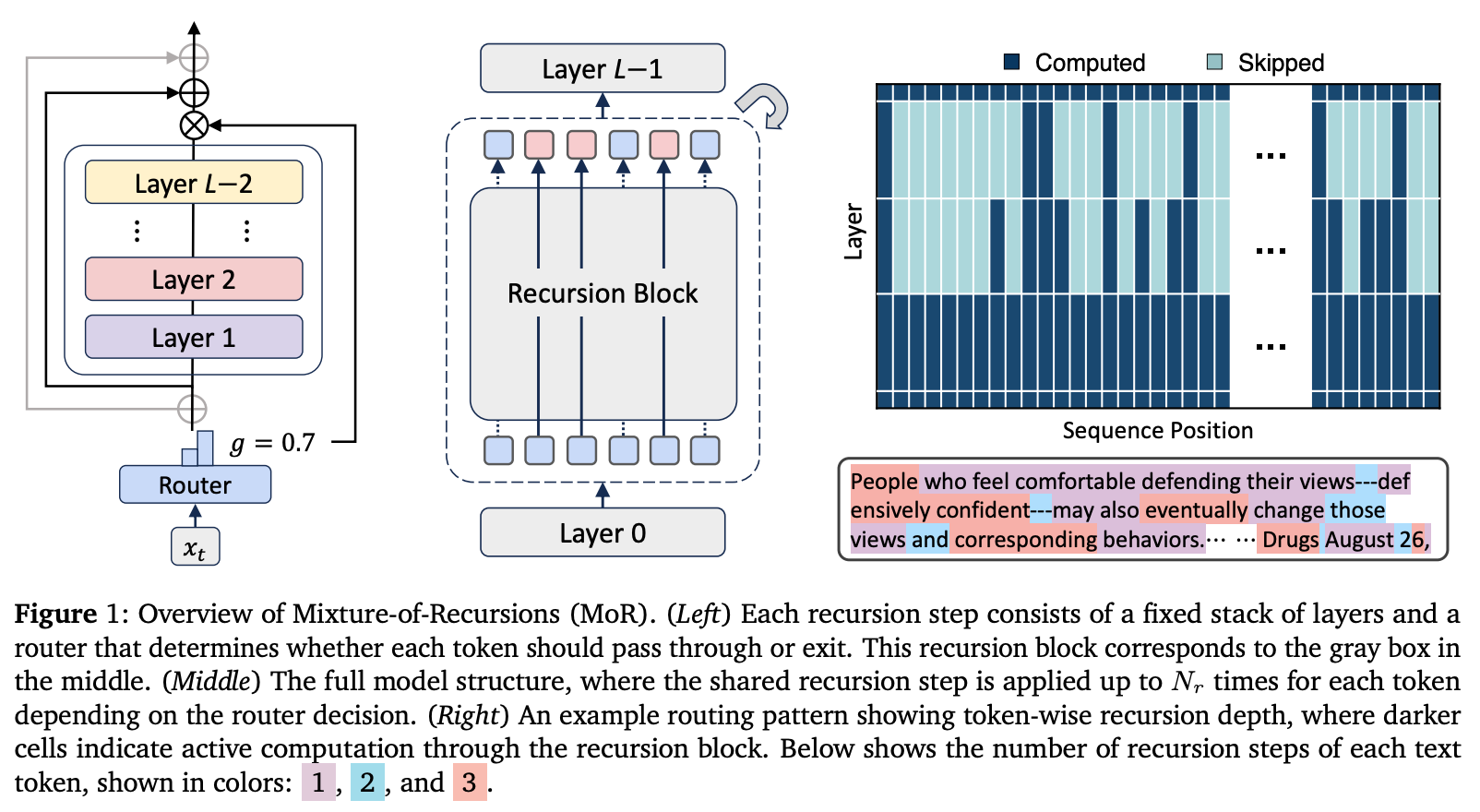
“Mixture-of-Recursions (MoR) presents a unified Transformer architecture that simultaneously leverages parameter sharing, adaptive recursion depth, and efficient KV caching without compromising model quality. By dynamically assigning recursion depth to tokens via lightweight routers and selectively caching key-value states for selected tokens, MoR reduces both quadratic attention computation and redundant memory access costs. Extensive empirical evaluations show that MoR lowers validation perplexity and improves average few-shot accuracy compared to both vanilla and previous recursive baselines, even with higher inference throughput. These results demonstrate that MoR offers an effective path towards achieving large-model capabilities with significantly reduced computational and memory overhead.”
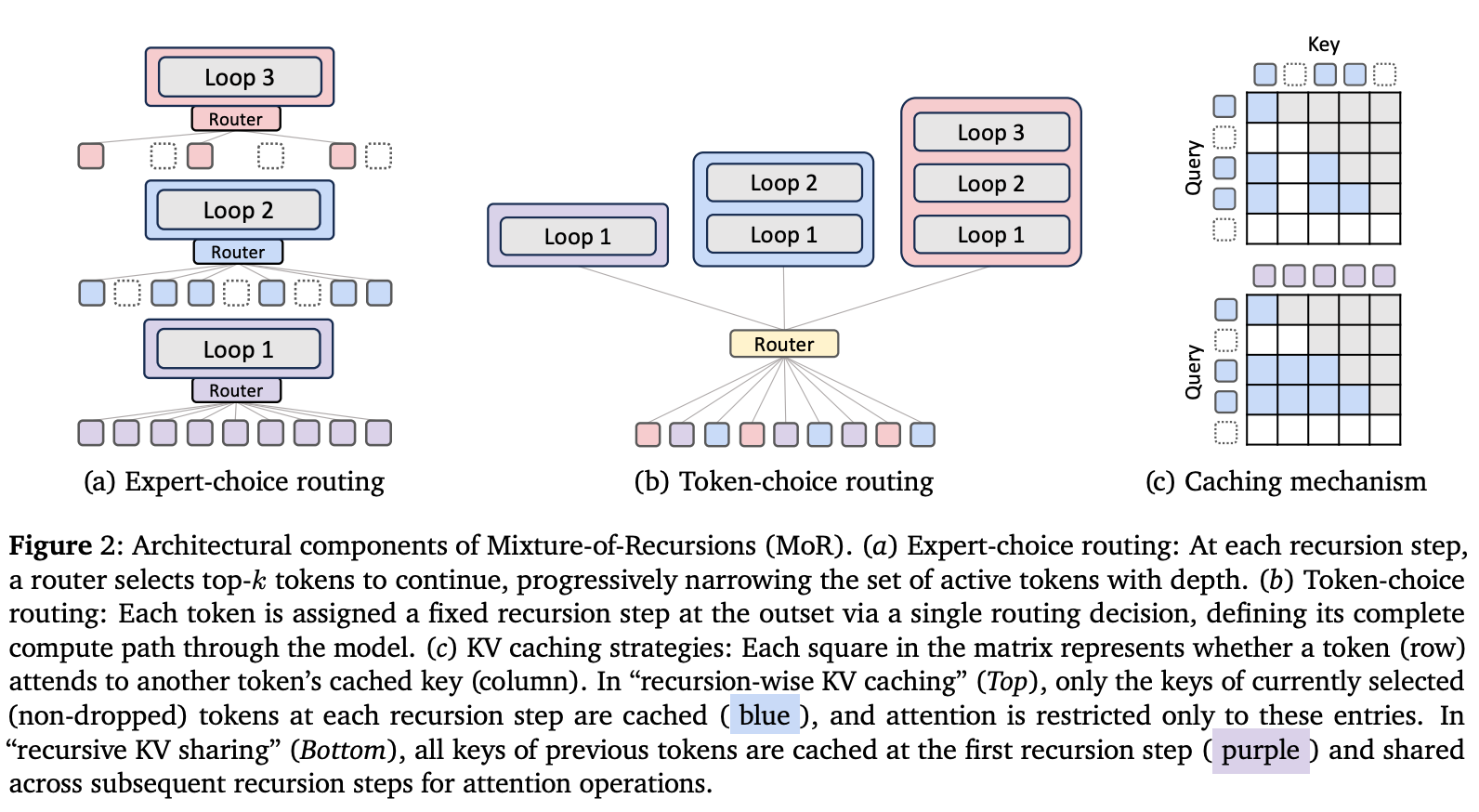
“MoR’s recursion block is inherently modality-agnostic, allowing its adaptive depth mechanism to extend beyond text processing. This crucial property enables MoR to readily integrate into vision, speech, and unified multimodal transformer architectures.”
Bae, S., Kim, Y., Bayat, R., Kim, S., Ha, J., Schuster, T., ... & Yun, S. Y. (2025). Mixture-of-recursions: Learning dynamic recursive depths for adaptive token-level computation. arXiv preprint arXiv:2507.10524.
https://arxiv.org/abs/2507.10524
Governing online goods: Maturity and formalization in Minecraft, Reddit, and World of Warcraft communities
correlated with successful self-governance
“The Internet is a vast laboratory of experiments in governance, self-governance, and self government’s interactions with technology. Although most attention to governance online is commanded by technology policy scholarship and social media giants, there is a sea of small actors trying to build a community around personal interests and discovering the importance and value of formal policies and structure. By better understanding how amateur administrators govern and how effectively their successes transfer, we can help support the ecosystem of online communities and increase the dynamism and empowering potential of the Internet.”
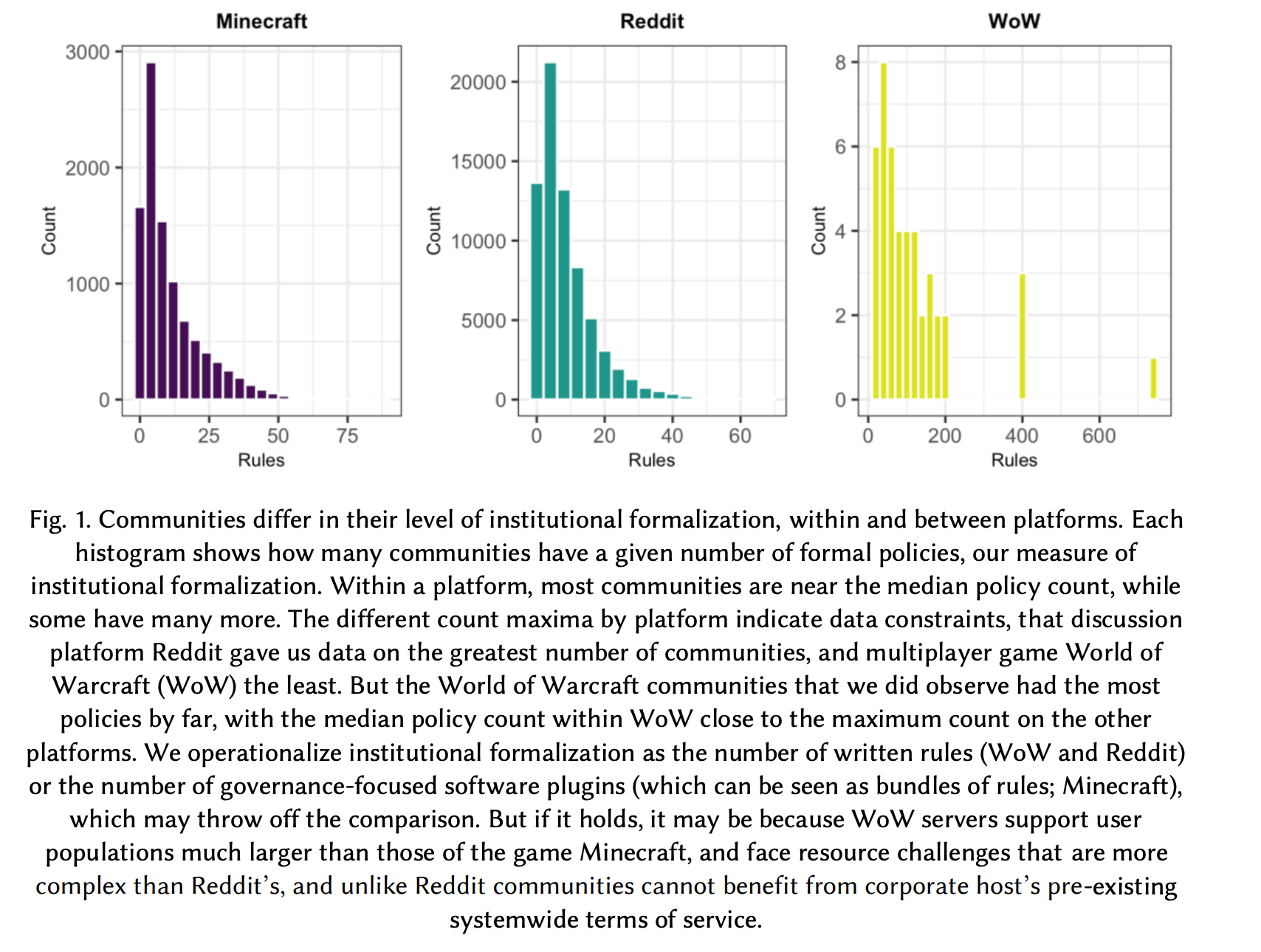
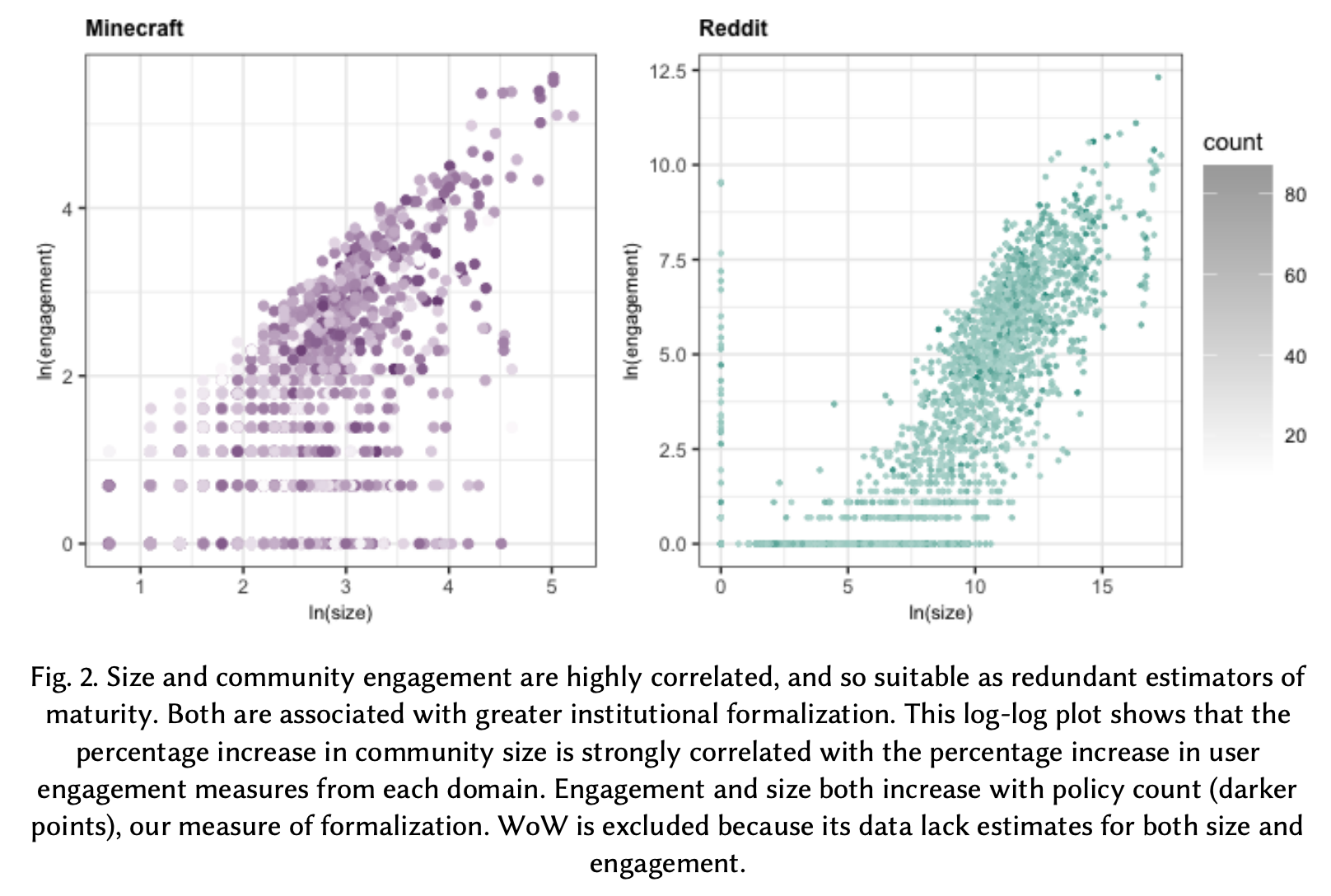
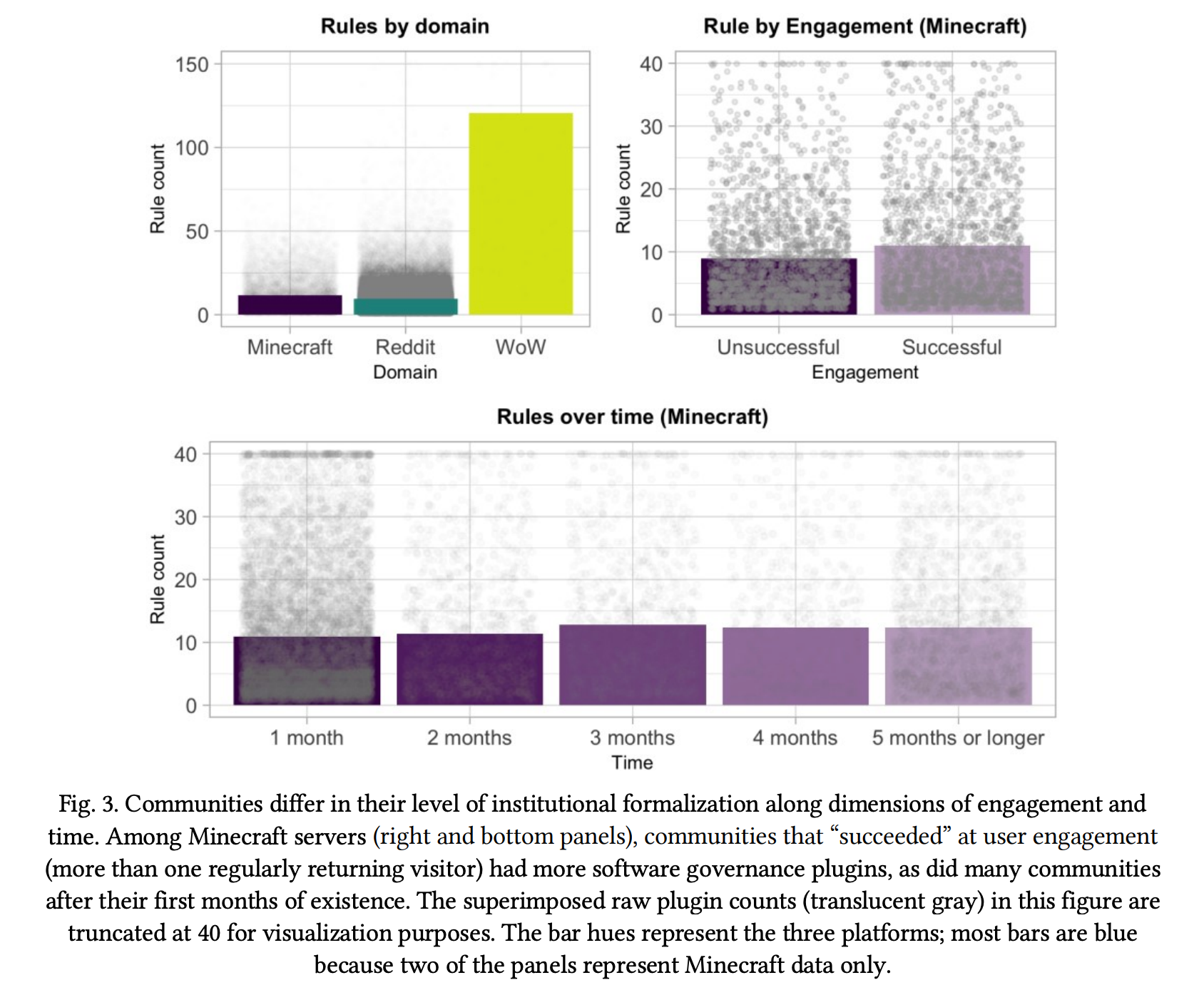
“To understand the relationship of formal institutions to community maturity and governance style, we conduct a large-scale quantitative analysis applying institutional analysis frameworks of self-governance scholar Elinor Ostrom to 80,000 communities across 3 platforms: the sandbox game Minecraft, the MMO game World of Warcraft, and Reddit. We classify communities' written rules according to several institutional taxonomies in order to test predictors of institutional formalization. From this analysis we extract two major findings. First, institutional formalization, the size and complexity of an online community’s governance system, is generally positively associated with maturity, as measured by age, population size, or degree of user engagement. Second, we find that online communities employ similar governance styles across platforms, strongly favoring “weak” norms to “strong” requirements. These findings suggest that designers and founders of online communities converge, to some extent independently, on styles of governance practice that are correlated with successful self-governance.”
“The greatest room for improvement is in our analysis of governance style. General schemes for classifying the types of policies that communities implement will be invaluable for providing communities with actionable governance best practices, and for better understanding institutional structure as a predictor of success. But more intersubjectively consistent rule type definitions are important for improving the reliability of these constructs, and better theory for interpreting rule type results will be essential for them to be able to contribute meaningfully to governance issues as they are understood in the HCI community. Relatedly, our use of written policies excludes unspoken norms, and our analysis was conducted without any sense of the overlap between the “rules in form” on which we base our analysis and the “rules in use” on which each community actually functions, nor on unobserved governance settings like private settings and messages.”
Frey, S., Zhong, Q., Bulat, B., Weisman, W. D., Liu, C., Fujimoto, S., ... & Schweik, C. M. (2022). Governing online goods: Maturity and formalization in Minecraft, Reddit, and World of Warcraft communities. Proceedings of the ACM on Human-Computer Interaction, 6(CSCW2), 1-23.
https://dl.acm.org/doi/pdf/10.1145/3555191
Reader Feedback
“I get that it’s a bubble, sure, what’s causing this one though? And do it lady.”
Footnotes
A few things came together in August. I became aware of an initial semi-popular (?) awareness about the AI bubble. This coincided with devouring a long backlogged book: Hobart and Huber’s (2024) “Boom: Bubbles and the End of Stagnation”. Which coincided with a particularly dissonant whip-lash wtaf day: in the morning, I watched in amusement folks seeming not to understand the technology they’re confidently using to an afternoon in which folks hearing about business genAI use cases for the first time and are absolutely blown away wow, and by the end of the evening, people absolutely lamenting the end of the boom, 95% software failure rates, and the cynical public left in its wake.
Last week’s newsletter covered the log‐periodic power law singularity (LPPLS) model as an underlying technical explanation of bubbles, I wrote a footnote in affirmation, and this week, I connect to Sornette’s observation that it’s driven, in part, by boredom with the status quo. Which clicks right in with how James March talked to sociologists about us over in business management.
What happens when you experience a bubble from the inside, but non-religiously? What if you don’t literally believe in the AI Godhead?
You get this footnote.
Data agents on use cases like supply chain visibility may be some of the best technology we get…eventually…on the plateau of productivity.
Tell me what you possibly see productive coming out?
Hobart, B., & Huber, T. (2024). Boom: Bubbles and the End of Stagnation. Stripe Press.
Never miss a single issue
Be the first to know. Subscribe now to get the gatodo newsletter delivered straight to your inbox