
Still Strange and Awful
This week: RSI, NRI, 2D Rasterization, Construction (Strange and Awful), objective reasoning, experimental atlas
Self-Improvement Memory Enables Continual Recursive Self-Improvement
Check yourself
“In this work, we study Continual Recursive Self-Improvement (CRSI), a setting for continuing existing harness-optimization methods across compatible benchmarks or policy models. We propose Self-Improvement Memory (SIM) for the harness optimizer, rather than the task-solving policy. SIM groups edits by recurring harness problem and records their rationale, predicted and observed outcomes, and evaluation context.”
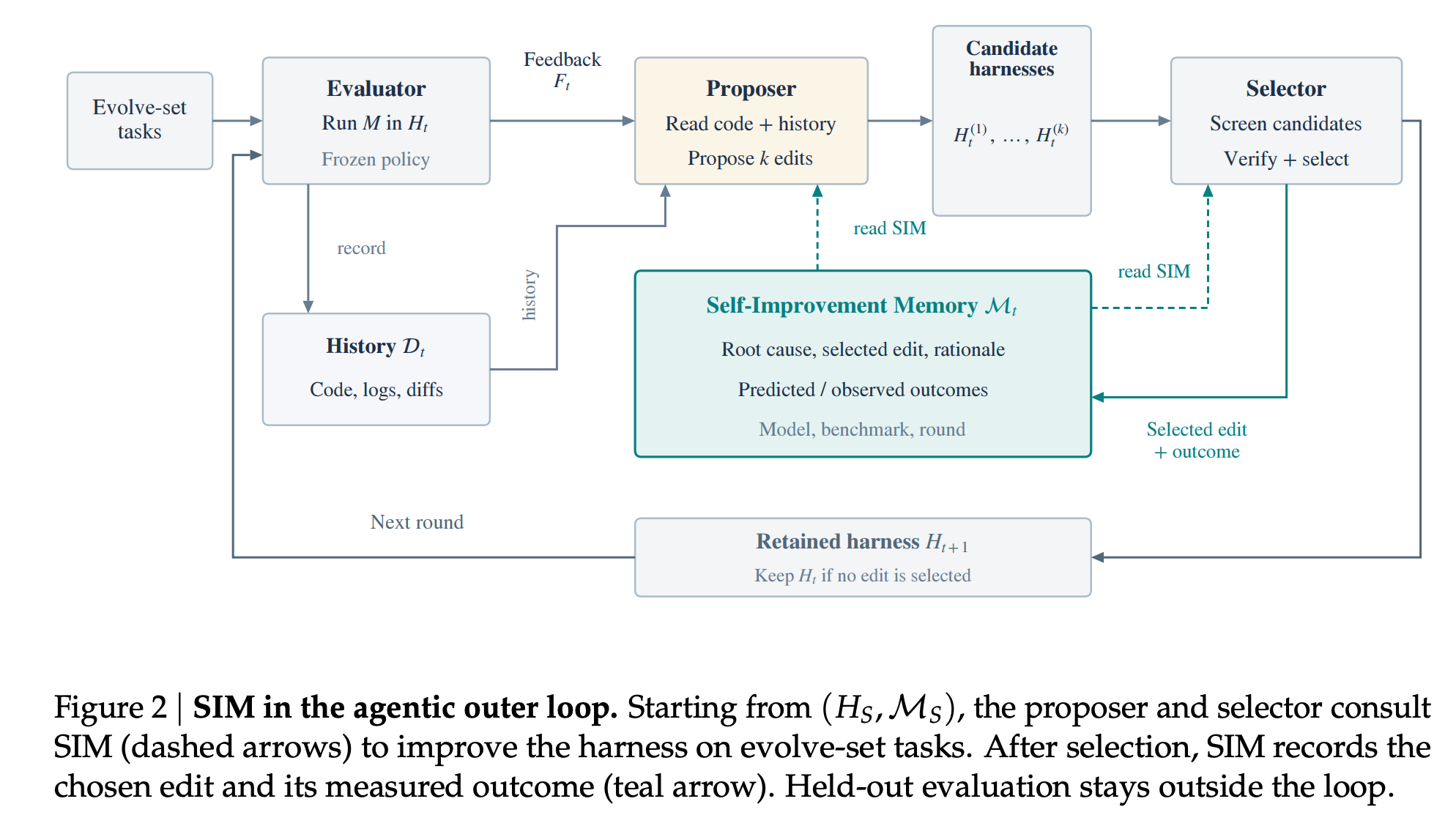
“With SIM, the proposer uses the gate’s rationale and source outcomes to retain completion verification while adding target checks, including feasibility versus optimality.”
Yu, X., Xia, F., Pan, J., Tang, Y., Liu, C., Yu, A., Jiang, S., Chen, Y., Xue, L., & Yu, T. (2026). Self-improvement memory enables continual recursive self-improvement [Preprint]. arXiv. https://doi.org/10.48550/arXiv.2611.18856
https://arxiv.org/abs/2611.18856
Neural Representations as New Modes of Interactivity
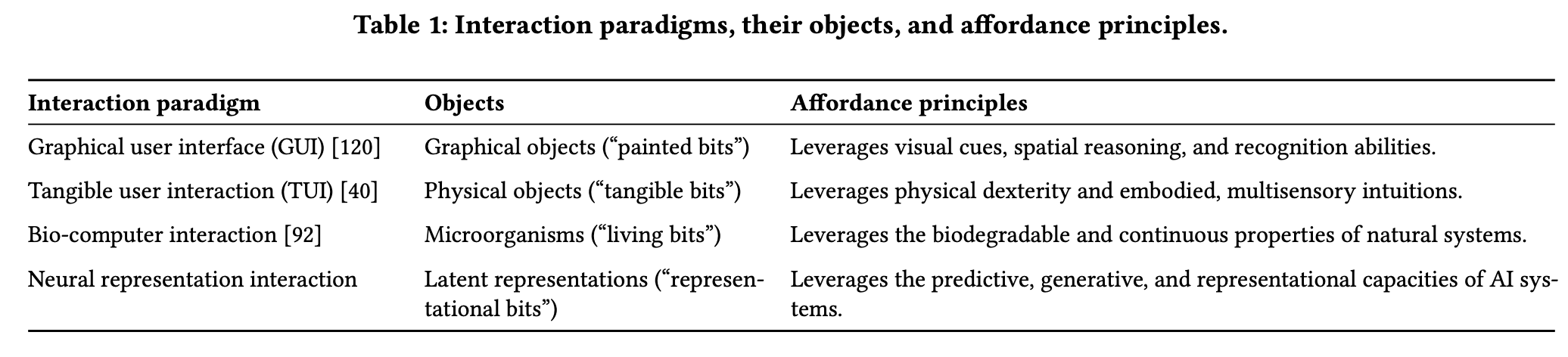
Neural representations is a pretty good descriptor?
“Human-AI interaction today runs almost entirely through prompts and outputs, keeping AI systems opaque to general users. We introduce Neural Representation Interaction (NRI), a paradigm that treats the internal representations of neural networks as an interaction material people can inspect, steer, and edit.”
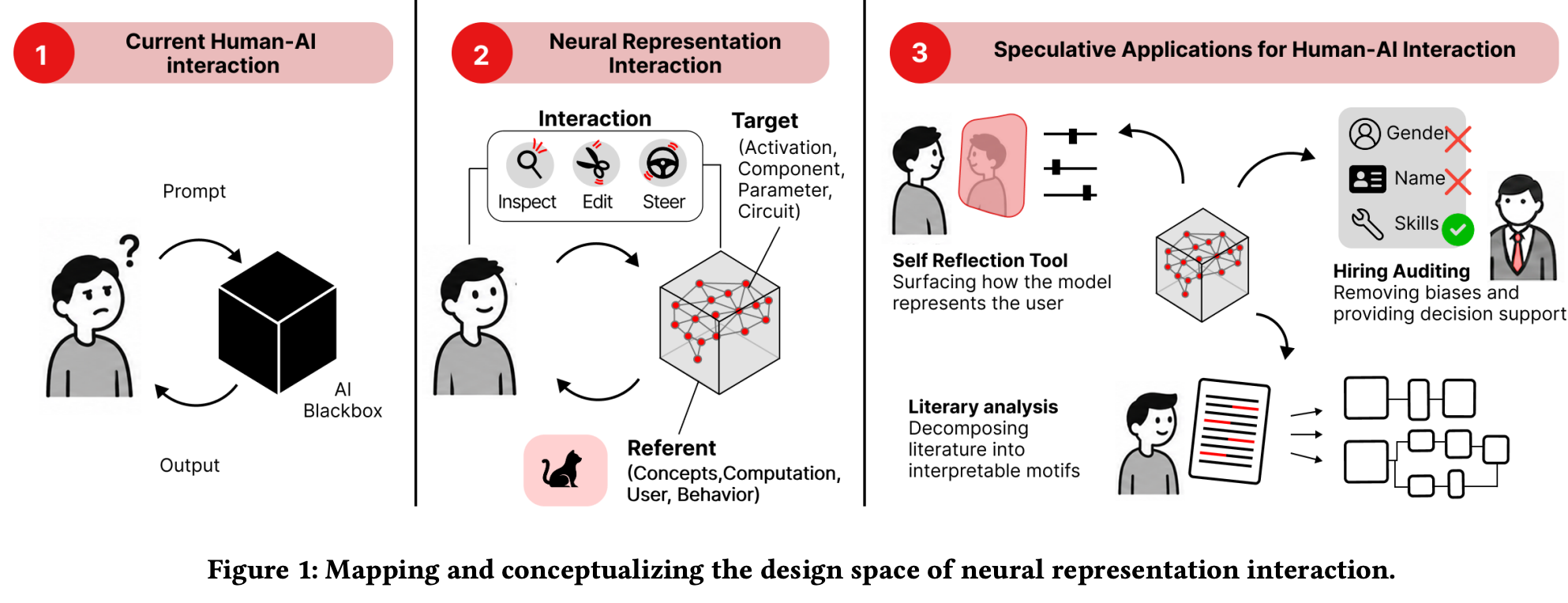
“Here, we aim to conceptualize a new interaction framework called Neural Representation Interaction (NRI). We define NRI as interaction that enables users to interpret and direct the neural representations of AI systems.”
“Anthropomorphization. How representational bits are interfaced with may also promote the anthropomorphization which NRI aims to counter (subsection 2.2). Verbalization could convey activations in the grammar of mental states as reporting what a model "believes" or "wants" invites users to treat statistical structure as intention [1, 110]. These novel interfaces have an opportunity to be careful with their communication by describing internals in the language of algorithm and computation. Additionally, the interaction methods, such as editing, could be presented in a way that portrays a sense of determinism. Whether such framings do in fact reduce anthropomorphism is a potential empirical question.”
Huang, S., Baez, A., Yeh, C., & Pataranutaporn, P. (2026). Neural Representations as New Modes of Interactivity. arXiv preprint arXiv:2611.17058.
https://arxiv.org/abs/2611.17058
Semantics for 2D Rasterization
“rasterization is not a solved problem”
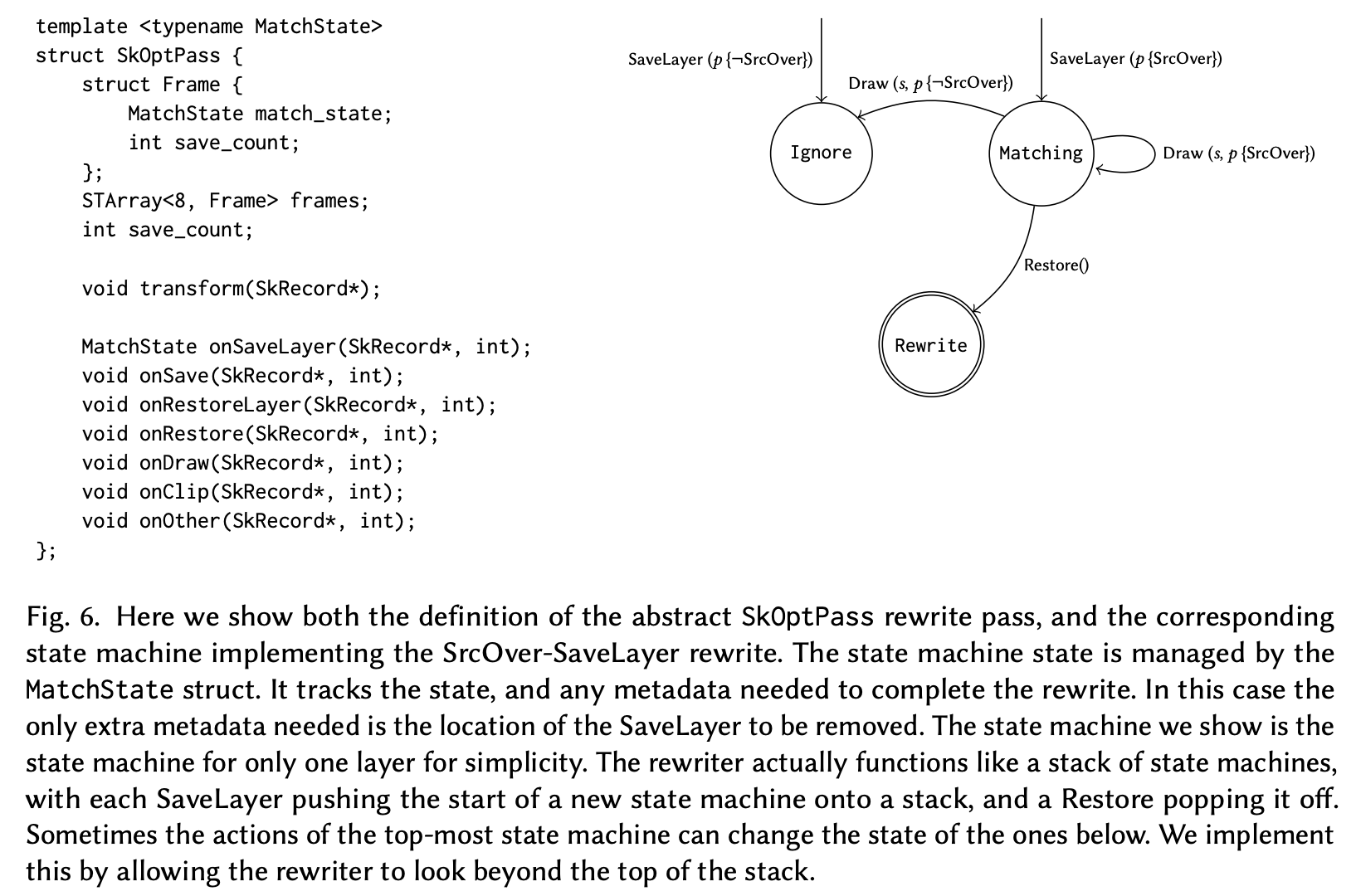
“We address this problem with 𝜇Skia, a formal semantics for the Skia 2D rasterization library. 𝜇Skia captures key features of the Skia API like canvas state, the layer stack, clipping, and blending. More generally, since these features appear in all rasterization libraries, drawing from their common PostScript heritage, we see our formalization as providing a foundation for future language-driven rasterization research. Our formalization is built in three strata—a command language, a functional core, and an abstract model—that separate concerns, simplify reasoning, and allow for extensibility. The semantics is mechanized in Lean and enables automated reasoning and verification of 𝜇Skia programs.”
“Skia supports many representations of shapes, including rectangles, pixel-boundary-aligned rectangles, rounded rectangles, polygons, paths, and text. Although paths provide a general representation, Skia often handles more specific shape types through specialized code paths. Transformations between these representations can also be confusing; for example, the intersection of two rectangles is a rectangle, but the intersection of two rounded rectangles is a path. Currently, our abstract model coalesces all these shapes into various constructors of one type, Shape. Future work could track the different types of shapes and the allowable transformations between them, which could enable more granular rewrite rules.”
Kulkarni, B., Whiting, H., & Panchekha, P. (2026). Semantics for 2D Rasterization. Proceedings of the ACM on Programming Languages, 10(OOPSLA2), 681-706.
https://arxiv.org/abs/2603.23696
Productivity Growth in Construction: Still Strange and Awful
A clue of what we’ll lose when we walk way from globalization
“A few years ago, Austan Goolsbee and I conducted a study (published as Goolsbee and Syverson, 2025) of the long-run pattern of productivity growth in the U.S. construction sector. We quantitatively explored a pattern others had also noticed: average productivity in the sector had been falling for decades. By our measures, value added per worker in the sector was about 35 percent lower in 2020 than in 1970, and the analogous drop for sectoral total factor productivity (TFP) was 40 percent. In other words, by 2020 the sector could only produce about 60 percent of the output from a given set of inputs that it could fifty years earlier.”
”The recurring failures indicate construction differs from standard manufacturing in several important ways. First, the geographic dispersion of construction means there must either be fabrication establishments near every population center, or transportation costs will be substantial. Buildings are heavy and bulky relative to their value and complicated to move.”
”Second, construction projects differ in their dimensions, designs, structural requirements, local building codes, and site conditions, limiting standardization.”
“Third, even if substantial portions of a building are manufactured, many things must still be fabricated on site, including grading, foundations, utility connections, and final assembly. Fourth, factory production also requires a large and predictable flow of orders. This poses a problem for houses, as demand is geographically fragmented, highly cyclical, and subject to uncertain project-approval processes.”
“Fifth, construction activities often occur asynchronously and in different sequences across projects, making it hard to maintain continuous utilization of specialized equipment and labor.”
Syverson, Chad (2026) Productivity Growth in Construction: Still Strange and Awful. University of Chicago Booth School of Business and NBER
What objective is reasoning solving?
“Reasoning as pathfinding”
“This post is my attempt to clarify this confusion (mostly for myself) by looking at reasoning as pathfinding through token space. We’ll see that RL maximizes the probability of finding a path from 𝑥 to S𝑥, but individual paths are not guaranteed to converge to the correct answer. As a bonus, this perspective clarifies some odd observations about reasoning models, like unfaithful chains of thought and reward hacking.”
“Reasoning isn’t actually solving any objective at all. A path is not guaranteed to converge to the correct answer. It’s only in aggregate, over the distribution of paths, do we get a high probability of success.”
“RL training directly raises the success probability 𝑝𝑥, by spending a lot of compute on searching for successful paths and then training the model to reproduce them. Thinking longer helps because training taught the model to use the extra tokens, not because generating more tokens is intrinsically better. The cost of sampling during RL is amortized into the weights. At inference time the model is likely to succeed with a single sample, but any individual sample is not guaranteed to succeed.”
Wang, A. (2026, November). What objective is reasoning solving https://alexwang.ai/posts/reasoning-as-pathfinding/
Experiments Atlas
Beautiful
Every experiment directory in oaustegard/experiments (except the shared _lib/), grouped by theme. 217 experiments in 12 clusters, with purposes taken from each directory's README or the repo's README index, as of 2026-11-07. Click a cluster name or its filter button to fold or unfold it; click an experiment for its purpose and link.
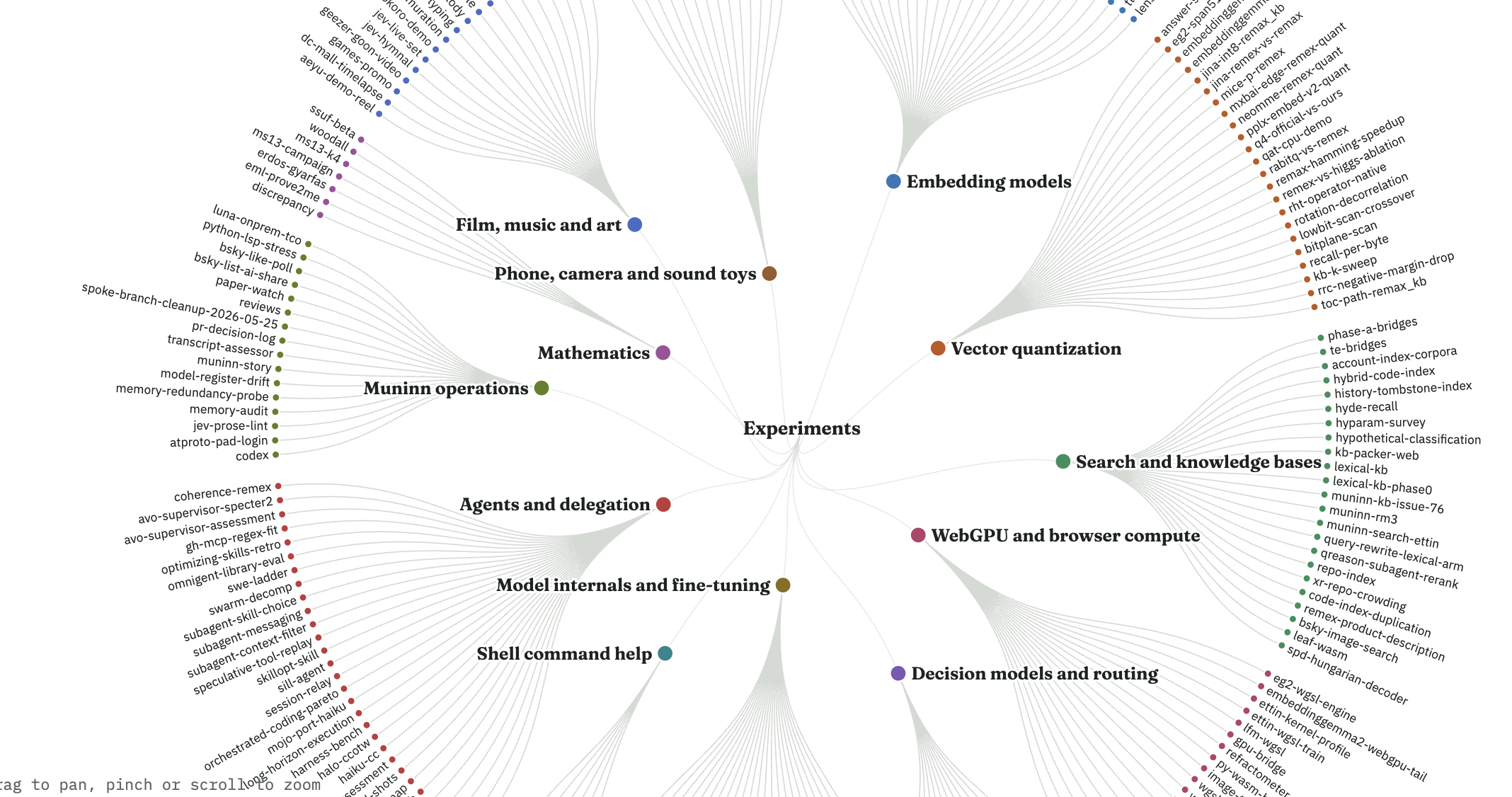
https://austegard.com/experiments/experiments-atlas/web/
Reader Feedback
“I thought Christiano was clear about the risks of AI.”
Footnotes
It’s unlikely that the frontier labs, as an org, know how close they are to RSI. All the outward signals are there of some classical Valve-like internal behaviour going on. But that’s the thing with the fog of war. I’m reading primary documents with experience of the quality attributes of orgs that cause primary documents to look that way. It’s entirely possible that it isn’t the way that it appears, but I don’t have alternative theories. The writing, the rumours, the information they want you to know, all has a distinct fingerprint of cloaked incertitude.
So what? To Chritiano’s point below, I’ve been concerned about trustworthiness for a few months. I felt relief watching him make the case. I’m just some guy. But Christiano is Christiano! So you have to pay attention to what he says!
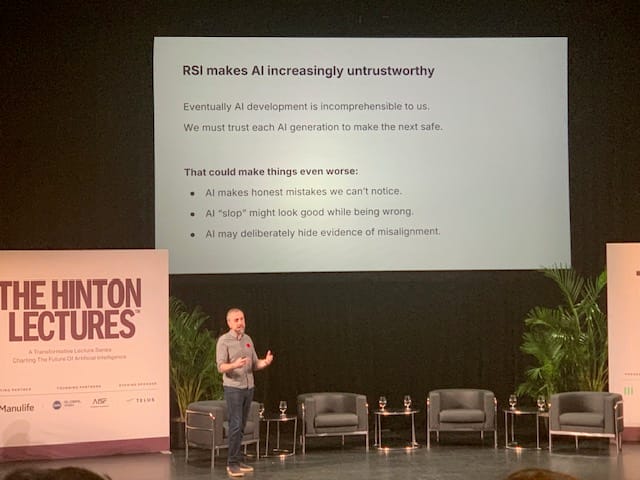
Maybe they’re close.
Maybe they aren’t.
I’d feel better if I understood their control mechanisms a lot better. I understand some of them. But not enough.
And the labs really aren’t optimizing for feelings anyway.
Never miss a single issue
Be the first to know. Subscribe now to get the gatodo newsletter delivered straight to your inbox