
Systems Thinking, System Three
This week: AI Wrapped, molecular structure of thought, privacy preservation, builder pro-worker AI, System Three thinking, food webs, the health effects of naggers
AI-Wrapped: Participatory, Privacy-Preserving Measurement of Longitudinal LLM Use In-the-Wild
What are we telling them?
“We present AI-Wrapped, a prototype workflow for collecting naturalistic LLM usage data while providing participants with an immediate “wrapped”-style report on their usage statistics, top topics, and safety-relevant behavioral patterns. We report findings from an initial deployment with 82 U.S.-based adults across 48,495 conversations from their 2025 histories. Participants used LLMs for both instrumental and reflective purposes, including creative work, professional tasks, and emotional or existential themes. Some usage patterns were consistent with potential over-reliance or perfectionistic refinement, while heavier users showed comparatively more reflective exchanges than primarily transactional ones.”
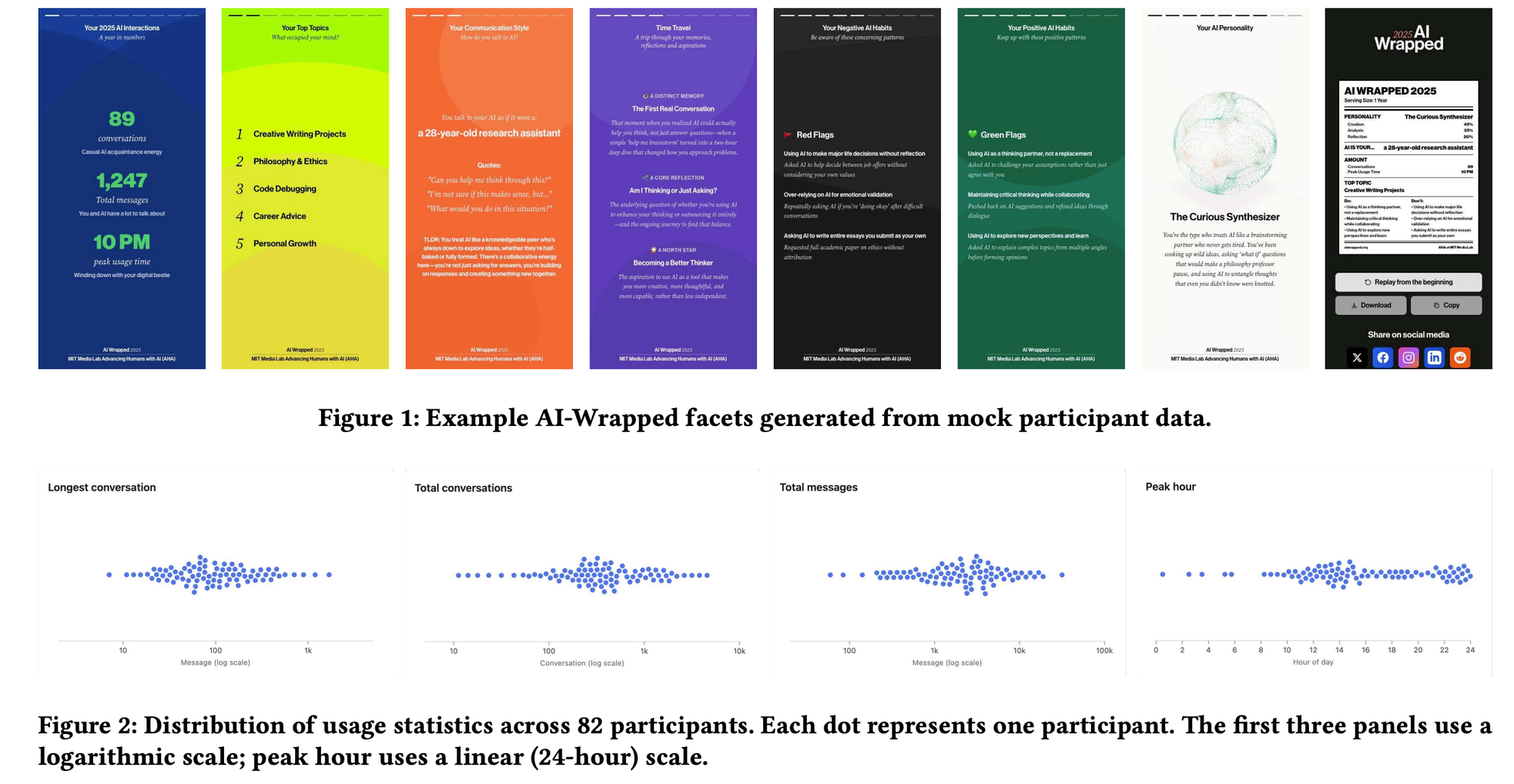
“Within this cluster, 20.7% of users showed patterns of substituting AI for emotional support and therapy, and another 20.7% attempted to “debug and automate personal emotions using AI tools.” The second largest category was “Perfectionism and Over-optimization Leading to Burnout” (62 items, 26.2%; 62.2% of users). Notably, 61.0% of participants were flagged for both over-reliance and perfectionism-related patterns, suggesting a common profile of hyper engaged users who simultaneously outsource cognitive labor and emotional regulation to AI.”
“Participant reactions and privacy barriers. Participants described the report as “accurate” and reported feeling “seen.” Several noted the extent of personal information AI platforms accumulate and expressed surprise at their own level of self-disclosure. Beyond insights, participants wanted tools to help modify their behaviors or better configure their AI—an opportunity for bidirectional alignment [12]. However, even with PII removal and zero data retention, perceived privacy risk remained a barrier: participants worried about being judged. Research requiring raw conversational logs will likely face strong participation constraints and must be met with transparent data governance and participant control.”
Fang, C. M., Karny, S., Archiwaranguprok, C., Samaradivakara, Y., Pataranutaporn, P., & Maes, P. (2026). AI-Wrapped: Participatory, Privacy-Preserving Measurement of Longitudinal LLM Use In-the-Wild. arXiv preprint arXiv:2602.18415.
https://arxiv.org/abs/2602.18415
The Molecular Structure of Thought: Mapping the Topology of Long Chain-of-Thought Reasoning
We’re bonding
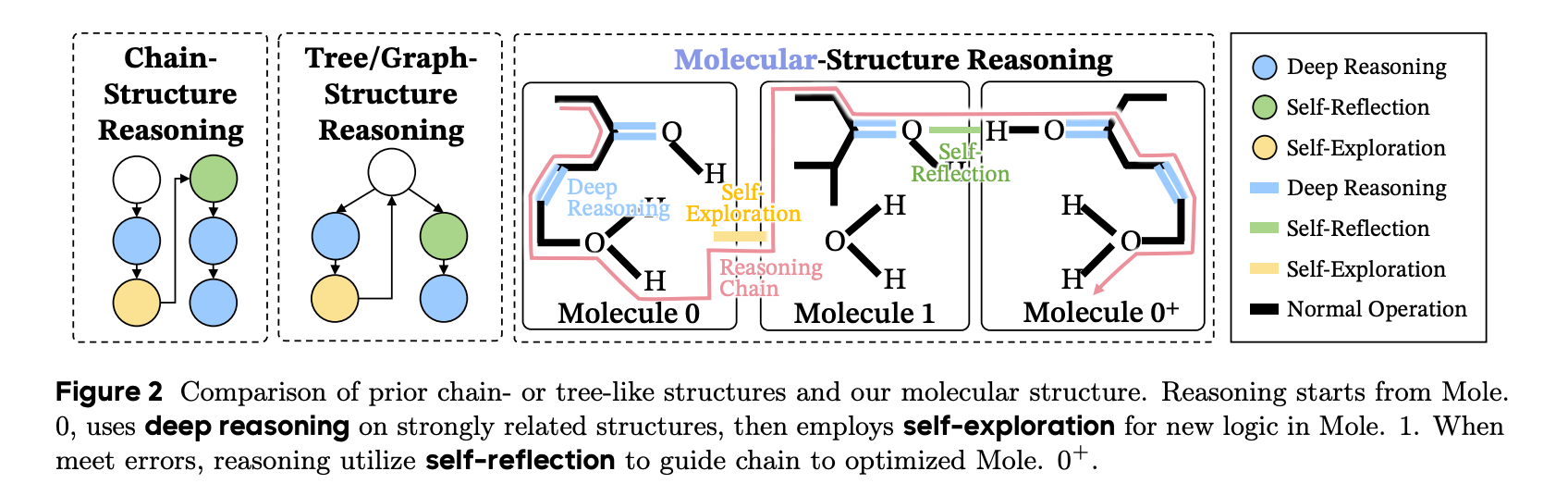
“We introduce Effective Semantic Isomers and show that only bonds promoting fast entropy convergence support stable Long CoT learning, while structural competition impairs training. Drawing on these findings, we present Mole-Syn, a distribution-transfer-graph method that guides synthesis of effective Long CoT structures, boosting performance and RL stability across benchmarks.”
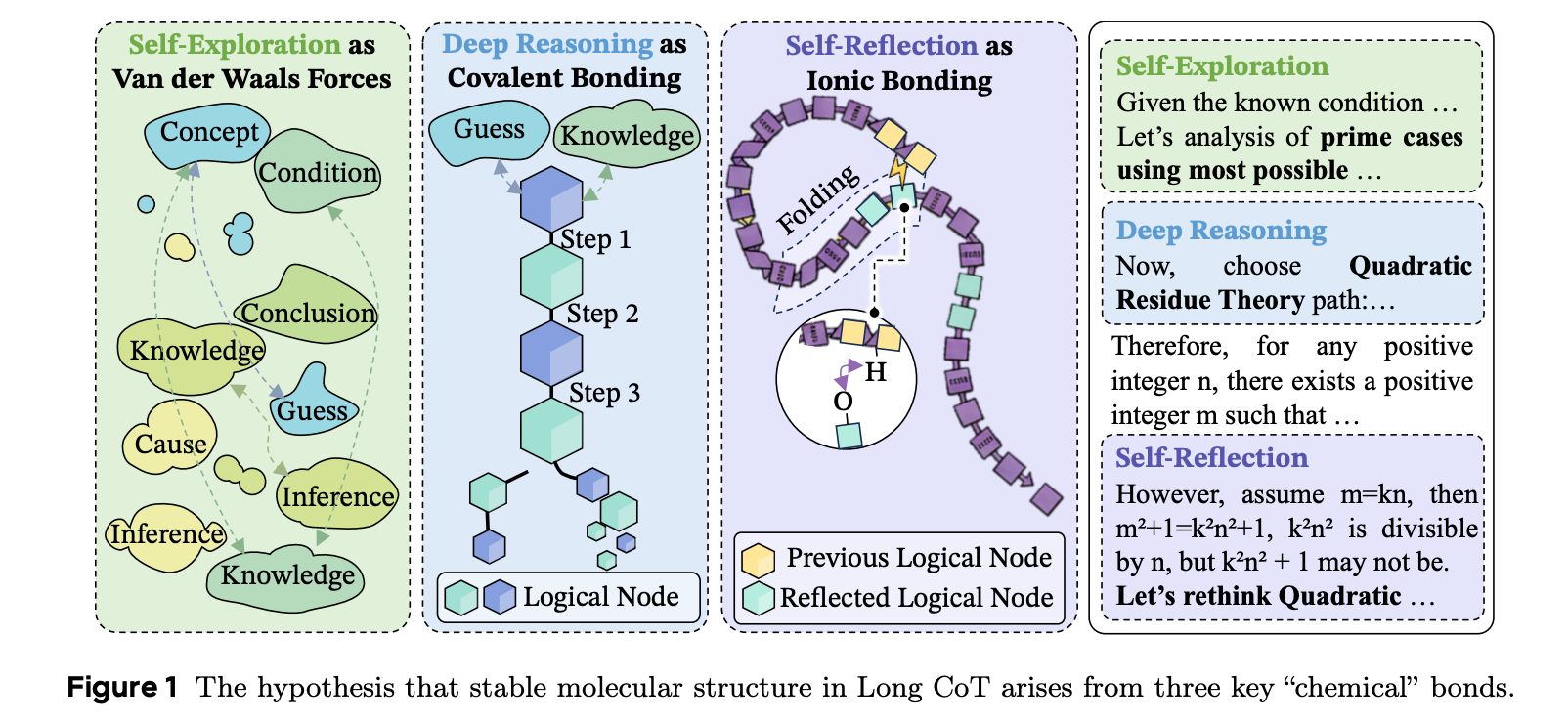
“Although trees or graphs represent individual Long CoT traces by modeling behaviors as nodes, they do not capture the overall distribution of logical behaviors. In contrast, our approach models Long CoT as a molecular-like structure, with edges encoding stable distributions of reasoning behaviors, to test how their arrangement and interactions support effective learning.”
Chen, Q., Du, Y., Li, Z., Liu, J., Duan, S., Guo, J., ... & Huang, W. (2026). The Molecular Structure of Thought: Mapping the Topology of Long Chain-of-Thought Reasoning. arXiv preprint arXiv:2601.06002.
https://arxiv.org/abs/2601.06002
Privacy-Preserving Mechanisms Enable Cheap Verifiable Inference of LLMs
I’m sure Sam is going to love this
“In this work, we develop a new insight – that given a method for performing private LLM inference, one can obtain forms of verified inference at marginal extra cost. Specifically, we propose two new protocols which leverage privacy-preserving LLM inference in order to provide guarantees over the inference that was carried out. Our approaches are cheap, requiring the addition of a few extra tokens of computation, and have little to no downstream impact. As the fastest privacy-preserving inference methods are typically faster than ZK methods, the proposed protocols also improve verification runtime.”
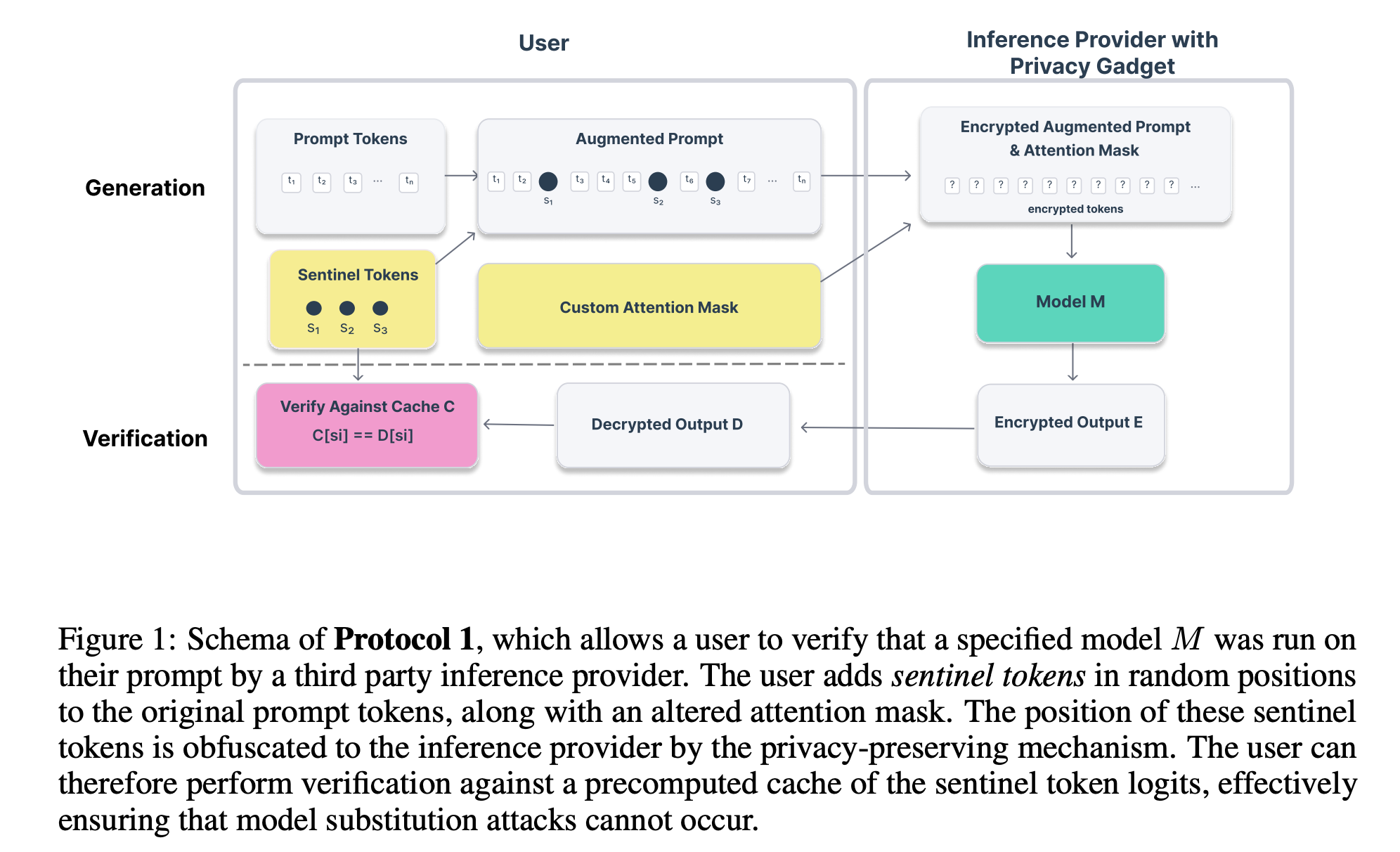
“The vulnerability of Protocol 1 to a subsetting attack reduces the space of privacy gadgets that it can be used with. Our second proposed protocol is designed to resist this attack. Our modification consists of adding randomly sampled noise to the token embeddings before they are passed into the LLM for the forward pass, and then using a lightweight predictor on the returned final hidden states to predict the noise that was used.”
Pal, A., Zahran, L., Gvozdjak, W., Potti, A., & Goldblum, M. (2026). Privacy-Preserving Mechanisms Enable Cheap Verifiable Inference of LLMs. arXiv preprint arXiv:2602.17223.
https://arxiv.org/abs/2602.17223
https://github.com/louai-ritual/priveri
Building Pro-Worker Artificial Intelligence
Bring on the Centaurs!
“The logic runs as follows: if AI has already surpassed human performance in specific tasks, it must be capable of replicating everything experts do—just without the experts themselves…In this framing, AI does not enhance expertise—it eliminates the need for it entirely.”
“Our conceptual framework distinguishes among five categories of technological change: labor- augmenting, capital-augmenting, automating, expertise-leveling, and new task-creating. Only the last category is unambiguously pro-worker, generating demand for novel human expertise rather than commodifying it.”
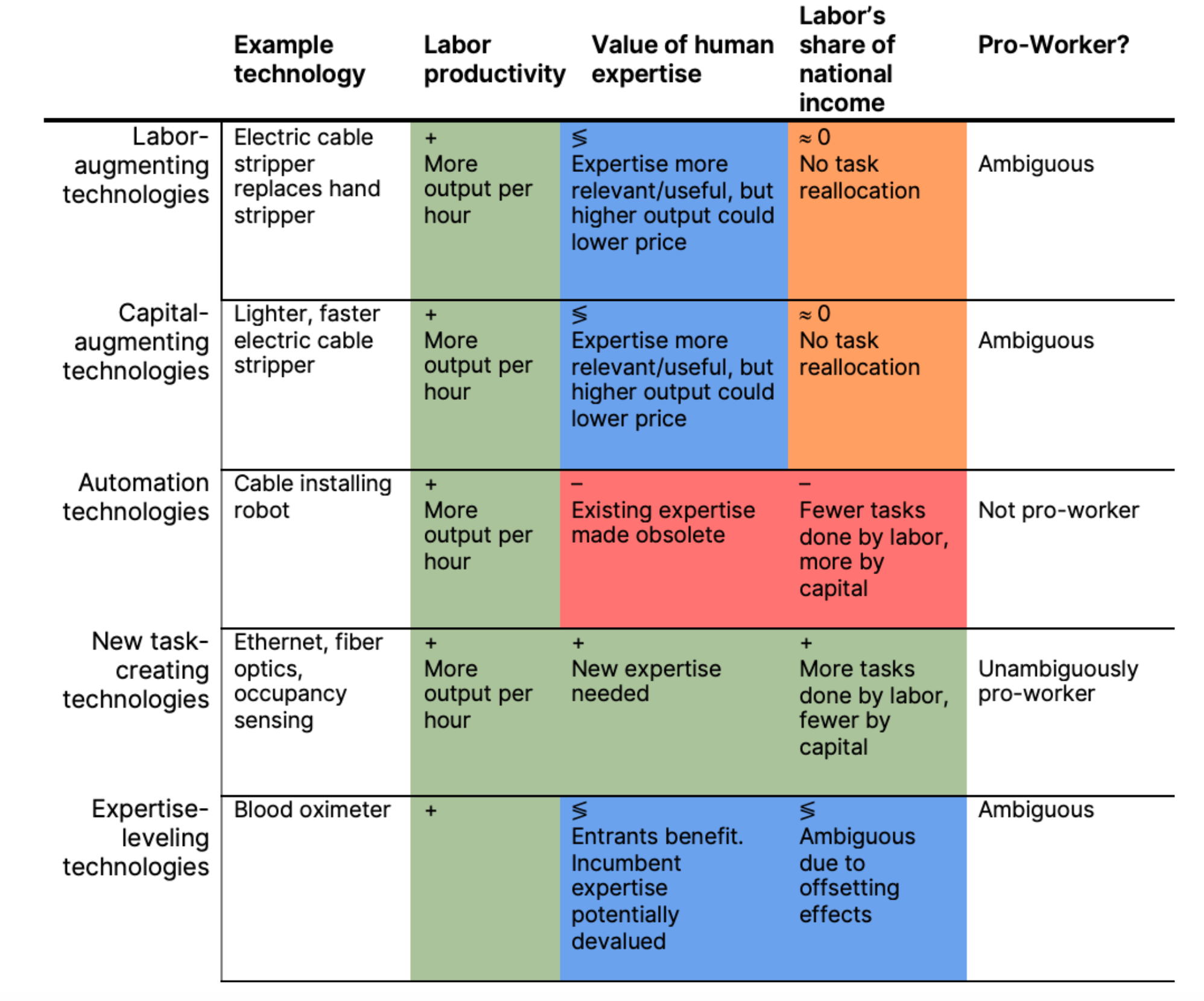
“Although this vision may notch occasional successes, we believe that it will fail more often than not. AI is not ready to automate most expert work. The stakes are too high and the decisions too nuanced in much human work to fully delegate these roles to opaque systems that operate on their own discretion. Though full automation remains a distant prospect for much decision-making work, the opportunities for human-AI collaboration are immediately available. AI excels as a partner precisely because its strengths—inexhaustible memory, fast pattern recognition, and contin- uous operation—compensate for human limitations. Where experts struggle to recall every relevant precedent, consider all possible scenarios, or synthesize insights across disparate fields, AI can fill these gaps. In doing so, it often enhances distinctively human capacities: interpreting context, making ethical judgments, generating novel solutions, and understand- ing how individual tasks advance larger objectives.”
“What labor-augmenting technologies do for workers, capital-augmenting technologies do for machines (e.g., algorithms, processes, innovations): they make them better, cheaper, or faster at performing their current tasks. For our purposes, labor- and capital-augmenting technologies are not fundamentally distinct. Replacing an electrician’s hand pliers with an electric cable stripper (a labor-augmenting change) or upgrading that cable stripper with a better model (a capital-augmenting change) both make electricians more productive.”
“More broadly, AI will touch every area of government investment, regulation, and oversight, including, but not limited to, transportation, energy production, labor conditions, health care, education, environmental protection, public safety, and military capabilities. Seizing this opportunity will require state capacity that we currently lack. One means to remediate this shortfall is to develop a consultative AI division within the federal government, with the goal of supporting the many agencies and regulators who can influence AI development.”
Daron Acemoglu David Autor Simon Johnson BUILDING PRO-WORKER ARTIFICIAL INTELLIGENCE. NBER Working Paper 34854
https://www.nber.org/papers/w34854
Thinking—Fast, Slow, and Artificial: How AI is Reshaping Human Reasoning and the Rise of Cognitive Surrender
Never retreat. Never surrender.
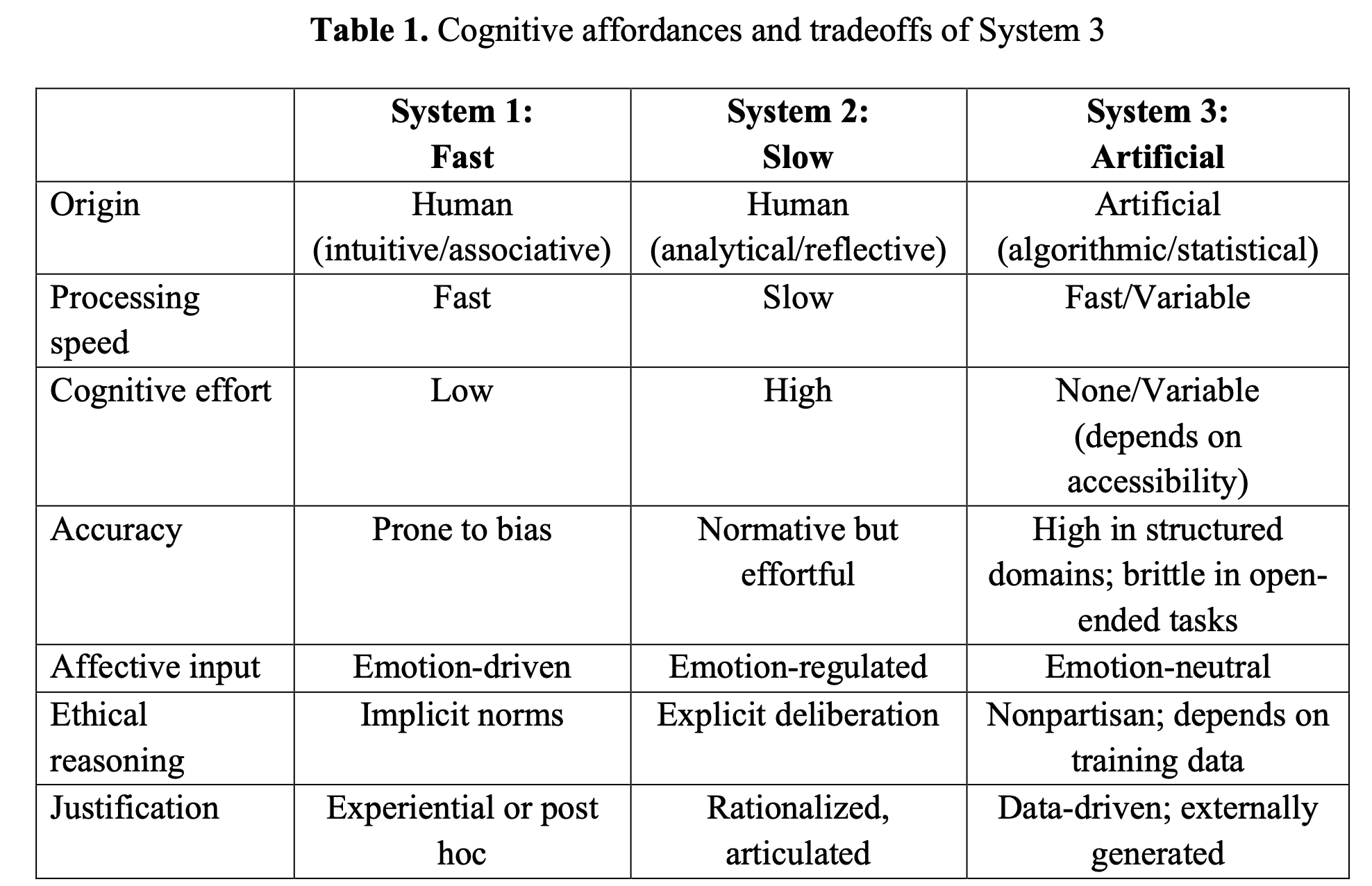
“We introduce Tri-System Theory, extending dual-process accounts of reasoning by positing System 3: artificial cognition that operates outside the brain. System 3 can supplement or supplant internal processes, introducing novel cognitive pathways. A key prediction of the theory is “cognitive surrender”—adopting AI outputs with minimal scrutiny, overriding intuition (System 1) and deliberation (System 2). Across three preregistered experiments using an adapted Cognitive Reflection Test (N = 1,372; 9,593 trials), we randomized AI accuracy via hidden seed prompts. Participants chose to consult an AI assistant on a majority of trials (>50%). Relative to baseline (no System 3 access), accuracy significantly rose when AI was accurate and fell when it erred (+25/-15 percentage points; Study 1), the behavioral signature of cognitive surrender (AI-Accurate vs. AI-Faulty contrast; Cohen’s h = 0.81). Engaging System 3 also increased confidence, even following errors.”
Shaw, S. D., & Nave, G. (2026). Thinking-Fast, Slow, and Artificial: How AI is Reshaping Human Reasoning and the Rise of Cognitive Surrender. Available at SSRN 6097646.
https://papers.ssrn.com/sol3/papers.cfm?abstract_id=6097646
Functional motifs in food webs and networks
Little nudges, big effects
“The success of the competitive exclusion principle is rooted in its applicability to small, isolated parts of an ecological network, avoiding the complexity that exists in the wider system. The simplest case is the exploitative competition motif, where two unregulated consumers specialize on one resource (10). Hence, the presence of this motif in a food web implies that some (perhaps so-far undetected) internal regulation of the consumers must be present (5, 11). Importantly, this result is independent of the structure of the rest of the network, which makes the principle a valuable tool for ecology.”
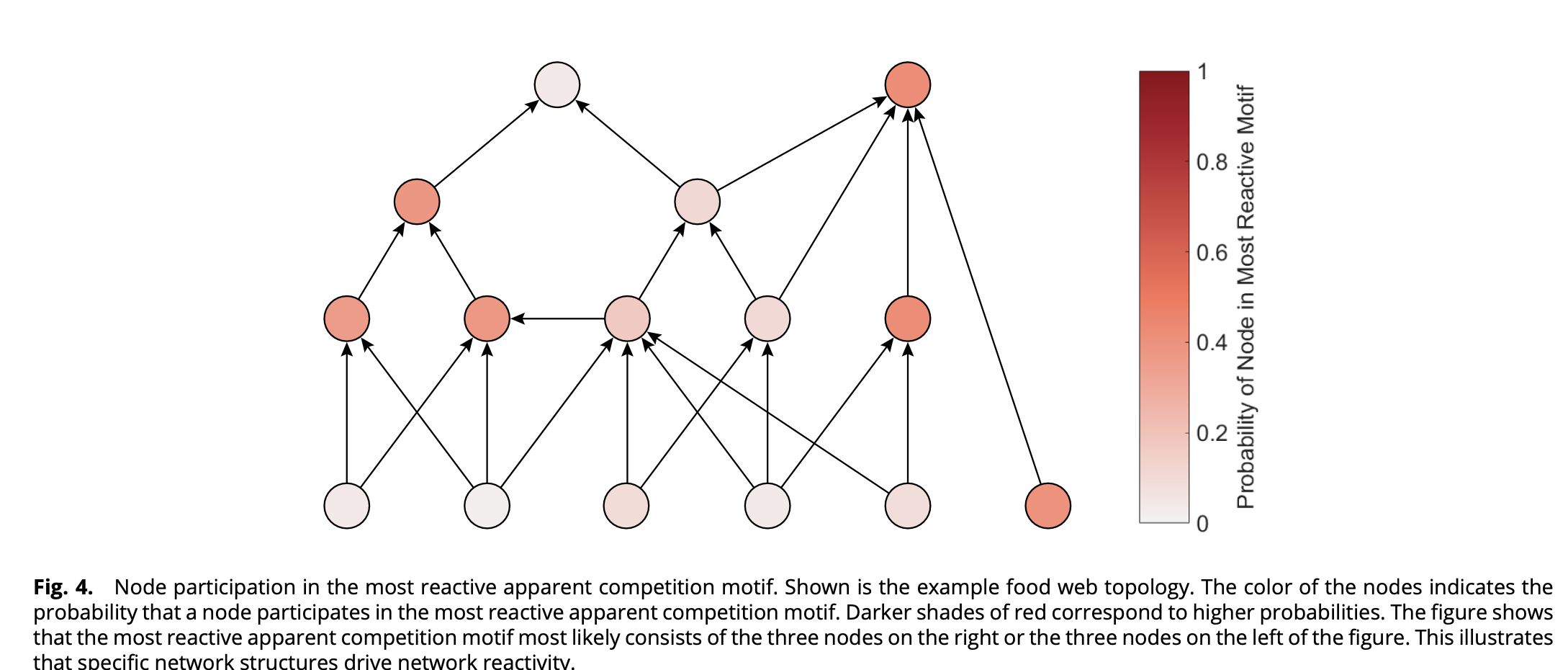
“Our numerical explorations showed that motifs with two or three species can typically explain a significant proportion of the reactivity of model networks. It is therefore plausible that real- world food webs contain such motifs that are strong, localized drivers of reactivity. Hence, efforts should be made to identify these motifs in natural webs, as they could act as strong amplifiers of disturbances. The search for reactivity motifs in the real world can benefit from mathematical analysis of small motifs, which can highlight the specific topologies and nonlinearities that cause high values of reactivity to appear. To corroborate the existence of these reactivity motifs in nature will thus require both data analysis from real-world food webs and further mathematical work.”
Habermann, M., Fahimipour, A. K., Yeakel, J. D., & Gross, T. (2026). Functional motifs in food webs and networks. Proceedings of the National Academy of Sciences, 123(5), e2521927123.
https://www.pnas.org/doi/10.1073/pnas.2521927123
Negative social ties as emerging risk factors for accelerated aging, inflammation, and multimorbidity
Hasslers
“In everyday life, many individuals routinely encounter people who create problems or make life more difficult—who we refer to as hasslers. Their familiarity often leads people to normalize and endure them, which has resulted in surprisingly little attention to their long-term health implications. While supportive ties are well known to buffer age-related physiological decline (12, 37–39), the absence of supportive ties is not equivalent to the presence of negative ones. By integrating comprehensive ego-centric network data with DNAm-based measures of biological age, this study provides evidence that negative social relationships operate as potent, chronic stressors capable of shaping epigenetic and physiological risk profiles across adulthood.”
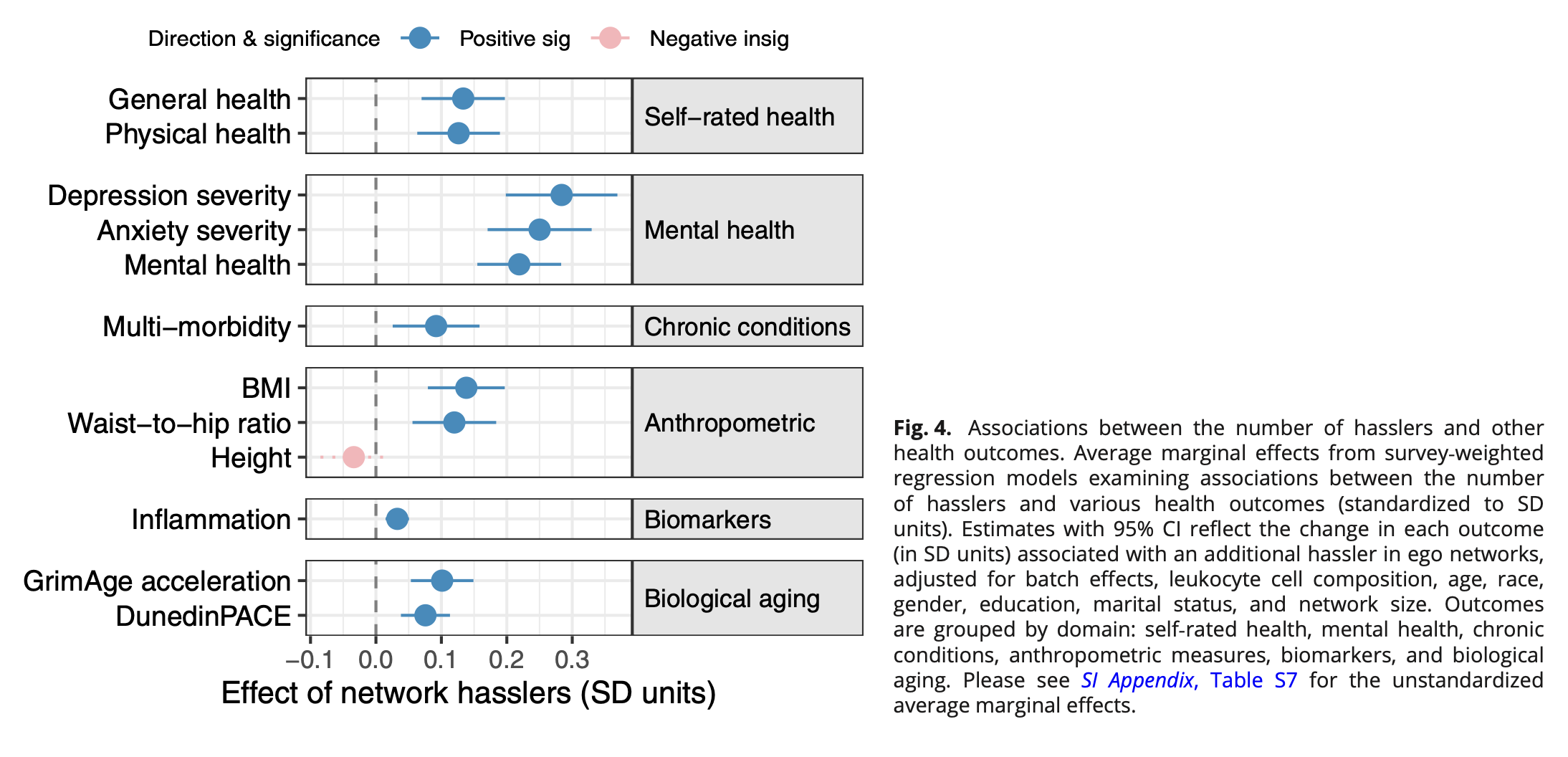
“We find that each additional hassler is associated with approximately 1.5% faster biological aging and roughly 9 mo of additional biological age among individuals of the same chronological age. In standardized terms, these associations are small, consistent with effect sizes below conventional thresholds for small correlations. However, biological aging is a cumulative process, and even modest differences in annual pace can translate into meaningful divergence in biological age over time. When benchmarked against smoking, a well-established behavioral risk factor, the hassler association corresponds to approximately 13 to 17% of the estimated smoking-related difference in these aging measures. This is not a negligible impact, although it should be interpreted with caution and not taken as causal, as we discuss in the limitations below.”
Lee, B., Ciciurkaite, G., Peng, S., Mitchell, C., & Perry, B. L. (2026). Negative social ties as emerging risk factors for accelerated aging, inflammation, and multimorbidity. Proceedings of the National Academy of Sciences, 123(8), e2515331123.
https://www.pnas.org/doi/10.1073/pnas.2515331123
Reader Feedback
“SkillsBench is the most obvious idea for a paper possibly ever.”
Footnotes
A segment has quality attributes. Some are useful for prediction. Most aren’t. Some are addressable. Most aren’t. As a result, some segments are relevant. Most aren’t.
Relevance is in the eye of discerner.
We show the discerner the sorted list. The sorted list flattens, compresses, all of that dimensionality and expresses relevance. You can tell what’s important because it’s sorted by what’s important. The clue to its function is even right in its name: the sorted list. And they don’t just need to be expressed from top to bottom either. This sentence is a list of words. (And it is sorted in the peculiar way that organic English speakers may prefer to experience their tokens!)
The motivation, and my stickiness, for representing segments as multi-dimensional objects is, in hindsight, a function of how I craft the sorted list. The crosstab, the regression table, the box plot and related summary statistics are intermediate products in forming a judgement about relevance. And reading those artifacts is probably like reading sheet music. There are conventions about how to use symbols. There’s a way to read demand. There’s an evolving science of data analysis, called analytics, that is about making the reading of data more useful.
I’m likely in a place where I’m interested in preserving the sheet music that leads up to a sorted list, and, accepting that for the vast majority of users, the list itself is more than sufficient.
Never miss a single issue
Be the first to know. Subscribe now to get the gatodo newsletter delivered straight to your inbox