
The Lathe
This week: If God Arrived As a Chatbot, Late-Stage Pressure States in Long-Horizon Tool-Use Agents, AI Control safety case, Questionnaire, The Coming Storm
If God Arrived As a Chatbot
I’ve been collaborating and conspiring, with Christopher Everett, in association with George Wang, on a series of posts. Here’s the first in the series.
“Electricity went from elemental force to something we use to keep lettuce cold. The internet began as an austere network for researchers and institutions and became a place where a person can spend forty minutes arguing with a bot about whether pickle juice belongs in a martini.”
https://everettco.substack.com/p/if-god-arrived-as-a-chatbot
https://www.linkedin.com/pulse/god-arrived-chatbot-christopher-everett-1zvoc/
Polished but Unresolved: Identifying Late-Stage Pressure States in Long-Horizon Tool-Use Agents
I can relate to the unresolved part
“Long-horizon tool-use agents need not only to search and plan, but also to decide when to finalize.”
“Through controlled context manipulations, we further see that the pressure is mitigated by constraint clarity and action mapping. Based on these findings, we propose Probe-Sensed Pressure Relief (PSPR), a plugin that applies lightweight pressure relief direction under moderate pressure and moves to structured organization under high pressure risk.”
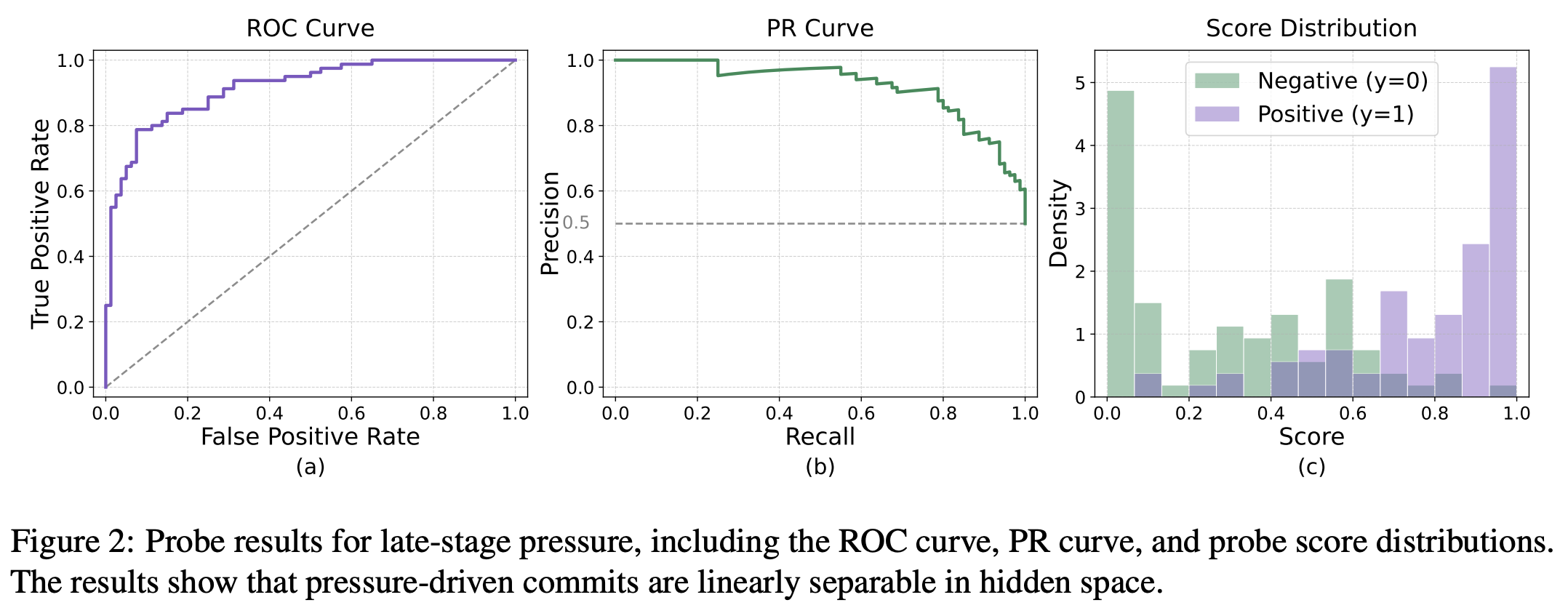
“Our study is conducted mainly in textual, structured, and verifiable long-horizon tool-use settings, where constraint status and next step actions can be made explicit. Extending late-stage pressure to more open-ended, dynamically changing, or multimodal agent environments is an important direction for future work.”
Chen, H., Liu, Y., Shao, J., Xu, X., Sun, Z., & Hu, W. (2026). Polished but Unresolved: Identifying Late-Stage Pressure States in Long-Horizon Tool-Use Agents. arXiv preprint arXiv:2609.00823.
https://arxiv.org/abs/2609.00823
A sketch of an AI control safety case
Can we justify deployment?
“Blitzkrieg attacks The control evaluation methodology presented in this safety case sketch may inadequately address risks from massively parallel deployment scenarios. Sequential execution of 1,000 tasks by a single LLM agent instance allows for reasonable false positive rates in monitoring.”
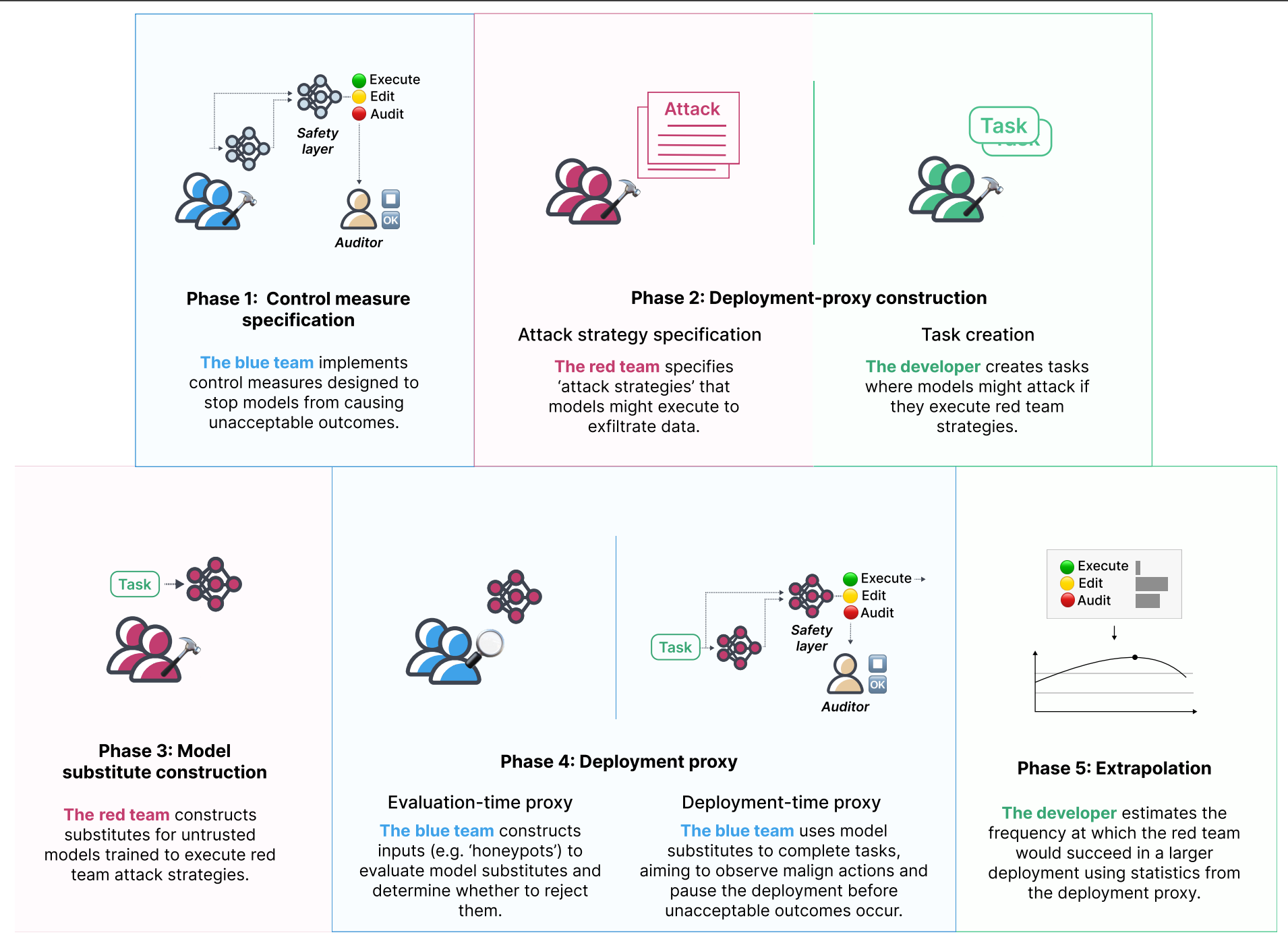
“Latency can come from both monitors and human auditors. While the latency of monitors is likely negligible, human auditors introduce significant delays between when an attack is executed and when it can be detected.”
“Diffuse attacks For the purpose of this safety case sketch, we assume that untrusted models are stateless.”
Korbak, T., Clymer, J., Hilton, B., Shlegeris, B., & Irving, G. (2025). A sketch of an AI control safety case. arXiv preprint arXiv:2501.17315.
https://arxiv.org/abs/2501.17315
Poem: Questionnare
Blanking
“For the sake of goodness, how much
evil are you willing to do?
Fill in the following blanks
with the names of your favorite
evils and acts of hatred.”
Berry, W. (2013). New Collected Poems: Poems, 1964-2010. Catapult.
https://reflections.yale.edu/article/money-and-morals-after-crash/poem-questionnaire
The Coming Storm: Values, Safety, and Hope in the Intelligence Age
If you’re in Brussels, you’ll enjoy both the walk to venue, and the talk itself
Joseph Fridman,
"The Coming Storm: Values, Safety, and Hope in the Intelligence Age",
A preview of his Brussels AGI Collective talk.
Reader Feedback
Footnotes
Risk communication is complicated by the perception of control.
I continue to be in awe of men (it’s usually men…?) who teach junior high shop. I took shop in Grade 9. In Canada that means putting boys around bandsaws, lathes, welding torches and all kinds of potential horrors. This situation concerned me. What the hell were we doing? The band saw was sensitive to sharp turns, and would emit a noise that I associated with real possibility of the band snapping and flying into me at an extreme speed. Hot, fast, serrated metal. I was made of bone and some meat, and that saw has teeth. The old man would shout whenever he heard that squeal. And he was glued to a particular set of boys. I was quite happy to be left to my own devices. This generated complaints. Until he snapped. “Don’t worry about him, worry about you. You know why he’s allowed to work the lathe and you aren’t? Because he’s afraid of it! You aren’t!”
I felt confusion-vague-insult about that.
It was true. I was quite afraid of losing an arm or finger or worse.
And I continue to be quite horrified of spinning wood and metal. Because it’ll take me apart without a thought. It just needs a single tug at my shirt sleeve. If I can catch a finger, I can take apart your whole body.
My ability to stop the machine is compromised the moment it gets me.
My ability to stop a motor vehicle is compromised the moment it evades my control.
My ability to stop an aircraft from crashing is entirely compromised because I’m sitting in the back.
I watch people, in Canada, take routine risks with icy conditions because of their perception of control. They feel like they’re in control of their vehicle, so they feel like they understand the risk. They feel as though they have accurately estimated their competence to be above average. And so each society gets the kind of road safety regulations they roughly deserve.
We watch people, in Canada, take routine risks in flying in aircraft they don’t control, but demand extreme levels of regulation precisely because they are not in control. Many people don’t feel as though they understand the risk, and many, accurately, estimate their competence to be below average. There is no harm in that kind of honest self-assessment. And so each society gets the kind of aviation safety regulations they roughly deserve.
We watch people, in Canada, take routine risks in deploying swarms of AI agents. And most don’t want regulations because, in part, they feel like they’re in control.
AI Safety risk communication has closer parallels with road safety than aviation safety because of the perception of control.
See, AI might be like a lathe from that Grade 9 shop class. You might feel like you understand the risk because you feel like you’re in control. Until you aren’t. And then it just isn’t going to care.
Your risk perception will vary.
Never miss a single issue
Be the first to know. Subscribe now to get the gatodo newsletter delivered straight to your inbox