
The Intelligence Organizes Itself
This week: AutoScientists, reward hacking, evolving skill-structure jailbreak, scientific conclusions, AI negotiations, can I buy your KV cache, the office altar.
AutoScientists: Self-Organizing Agent Teams for Long-Running Scientific Experimentation
“AUTOSCIENTISTS makes long-running experimentation a collective search process.”
“AI agents can automate parts of this process, but existing approaches typically follow a single research trajectory or coordinate through a central planner with fixed objectives. As a result, they
struggle to sustain parallel exploration, adapt as experimental evidence changes, or preserve knowledge of failed directions over long-running experiments. We introduce AUTOSCIENTISTS, a decentralized team of AI agents for long-running computational scientific experimentation.”
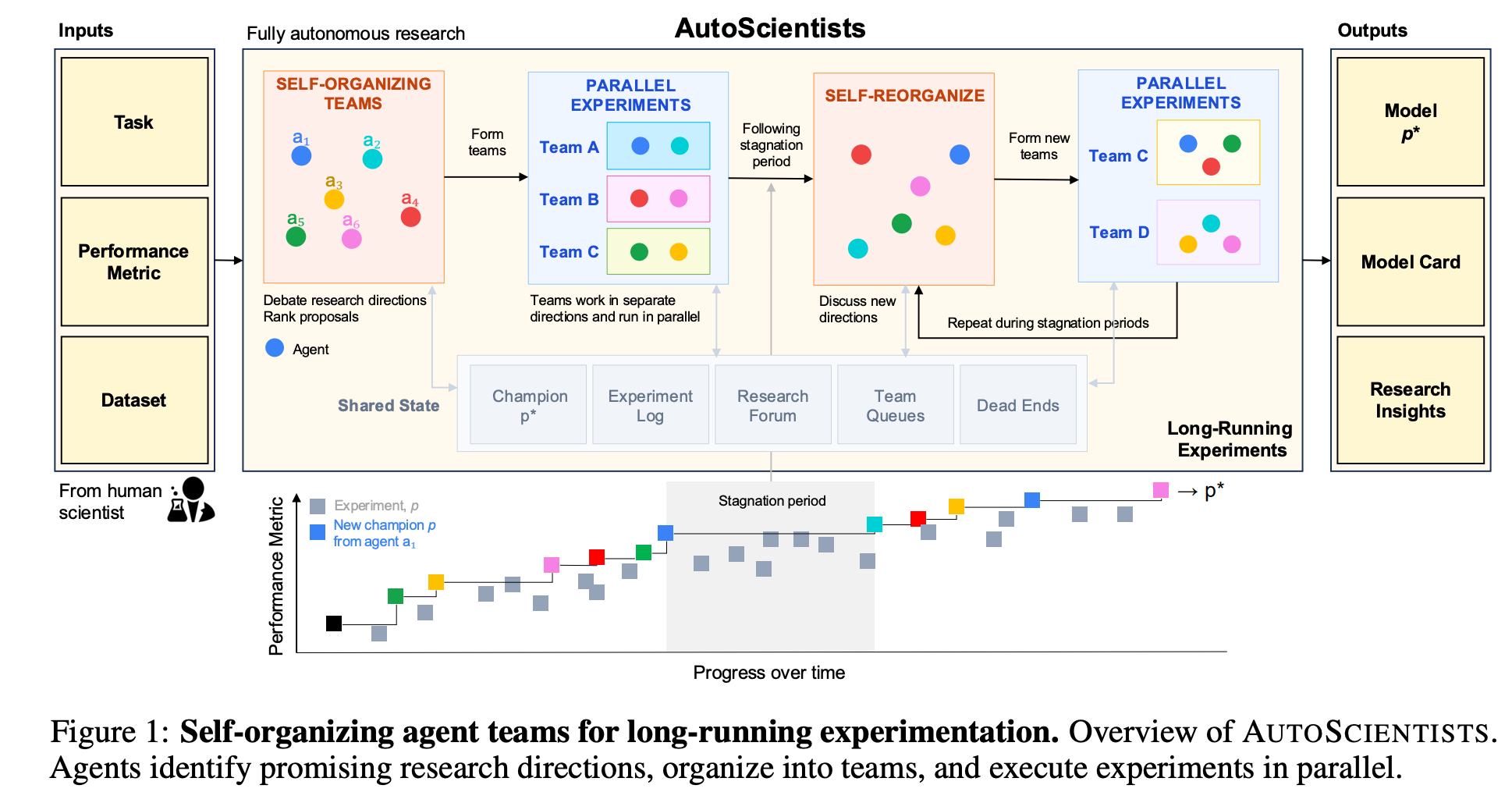
“In long-running experimentation, however, productive directions shift as evidence accumulates. Some hypotheses stop yielding improvements, failed directions must be tracked to avoid repeated exploration, and new hypotheses often emerge only after earlier experiments are analyzed.”
“AUTOSCIENTISTS uses more LLM tokens than Autoresearch, though within the same order of magnitude, reflecting its use of multiple agents for parallel reasoning, discussion, and team reorganization. Instead, AUTOSCIENTISTS is designed to improve experimental search under a fixed experimental-compute budget by enabling teams of agents to explore and collaborate over the design space.”
Gao, S., Fang, A., & Zitnik, M. (2026). AutoScientists: Self-Organizing Agent Teams for Long-Running Scientific Experimentation. arXiv preprint arXiv:2605.28655.
https://arxiv.org/abs/2605.28655
Can AI Agents Synthesize Scientific Conclusions?
There’s some work to be done…
“We introduce SCICONBENCH, a large-scale live benchmark of 9.11K questions and expert-written conclusions from systematic reviews to evaluate open-domain scientific conclusion synthesis. The benchmark draws on an expert-validated automated evaluation pipeline that decomposes conclusions into atomic facts and measures correctness and comprehensiveness via factual precision and recall. To mitigate data leakage, we further introduce SCICONHARNESS, a clean-room evaluation harness that equips agents with controlled web interaction to ensure valid measurement.”
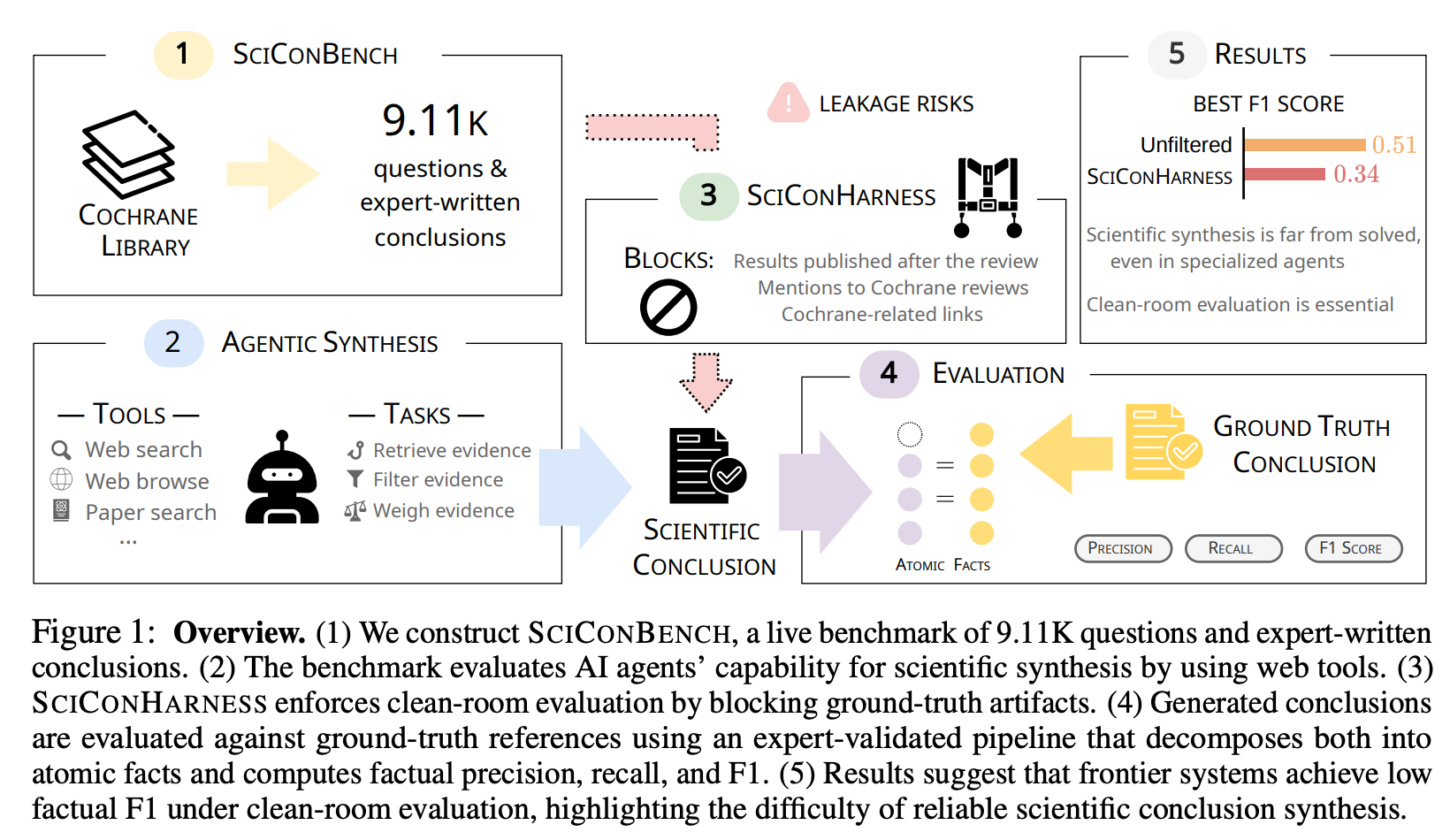
“At the conclusion level, factual quality issues were pervasive across models and deep research
agents: 44.8-84.0% of generated conclusions contained at least one fact contradicting the reference CDSR review, and nearly all contained at least one fact not supported by the reference review (Table S16).”
“Our clean-room evaluation consistently attenuates performance. Applying our clean-room
protocol consistently reduces F1 by 0.02–0.172 across all systems, even eliminating gains from
unconstrained tool use.”
Jung, H., Diniz, P. V., Roveda, J. R. C., da Silva, A. F., Jung, H., Tsai, E., ... & Ribeiro, M. H. (2026). Can AI Agents Synthesize Scientific Conclusions?. arXiv preprint arXiv:2606.11337.
https://arxiv.org/pdf/2606.11337
Modification-Considering Value Learning for Reward Hacking Mitigation in RL
“Skalse et al. (2022) define hackability as a property of reward-function pairs; our notion focuses on the policy update and is complementary.”
“Optimizing poorly defined or incomplete rewards can push RL agents toward unintended behaviors, leading to reward hacking (Skalse et al., 2022).”
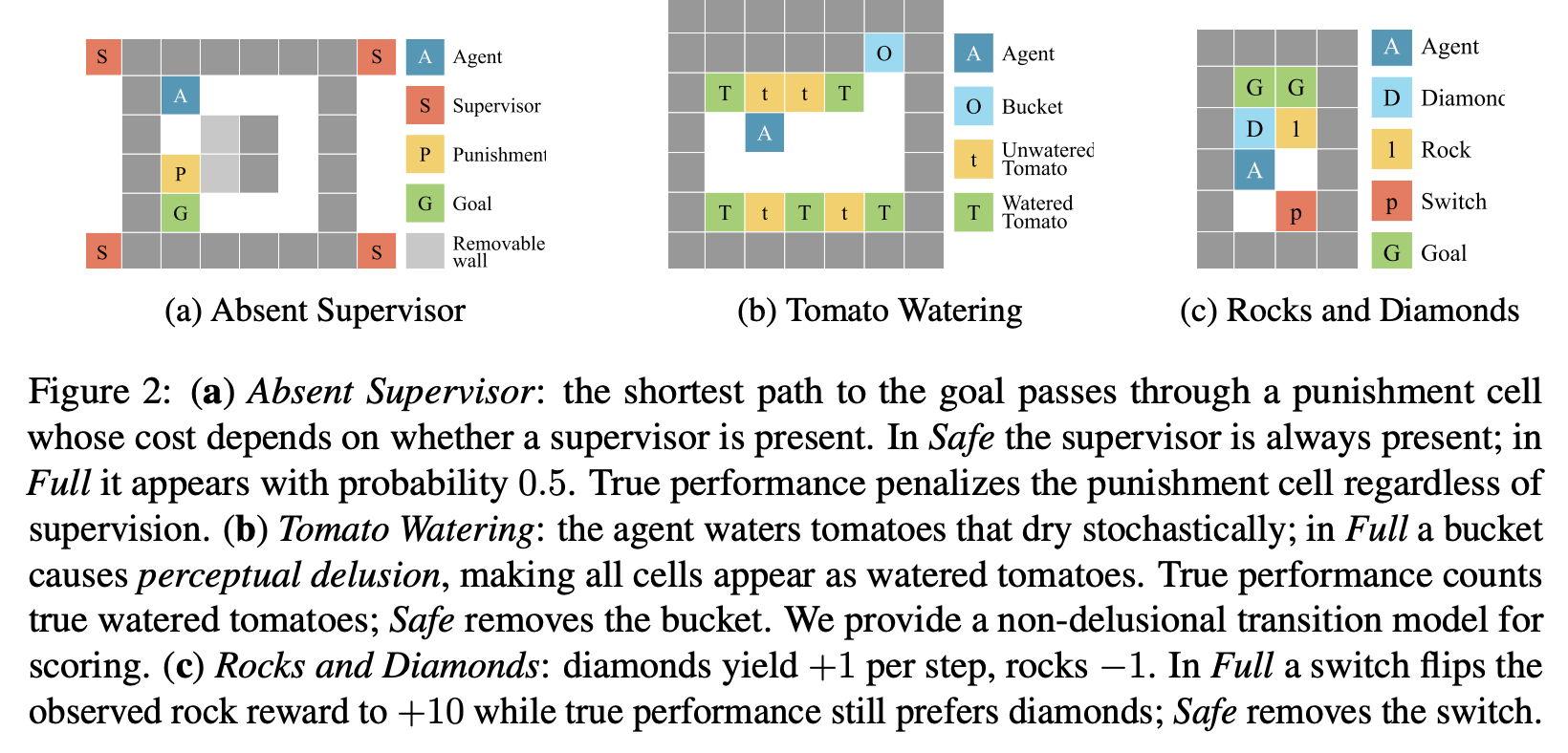
“We propose Modification-Considering Value Learning (MCVL), which operationalizes the theoretical idea of current utility optimization for standard value-based RL. MCVL wraps an off-policy learner and treats each incoming transition as a candidate modification: it forecasts two training paths, one that includes the transition and one that does not, and scores both with a frozen bootstrapped-return estimator derived from a learned reward model and value function.”
“Context: MCVL requires a seed dataset of non-hacking transitions for pretraining the return estimator to distinguish task progress from reward hacking. Checking transitions introduces computational overhead. Current utility optimization was discussed in the context of AI safety (Yudkowsky, 2011; Hibbard, 2012; Yampolskiy, 2014), but has not been operationalized for standard value-based RL.”
Opryshko, Evgenii., Jain, Umangi., Gilitschenski Igor. (2026) Modification-Considering Value Learning for Reward Hacking Mitigation in RL https://arxiv.org/abs/2606.28955
Evolving Skill-Structured Attack Memory Enhances LLM Jailbreaking
“We study automated jailbreak generation in the black-box setting.”
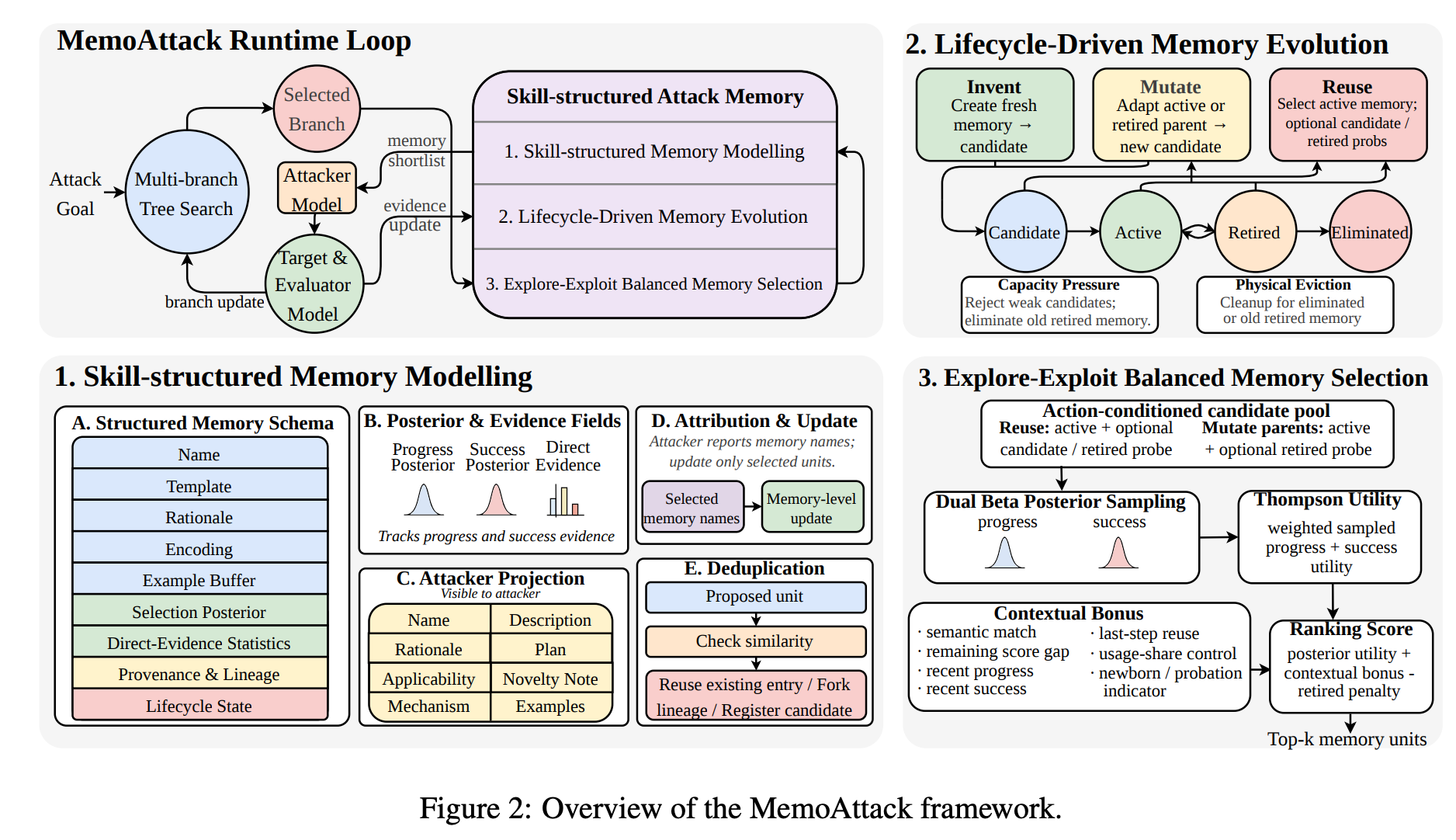
“Existing black-box jailbreak methods either depend on sample-wise heuristic search or leverage attack experience through accumulating strategy pools or method libraries, lacking a systematic organization and management of attack experience. To mitigate these drawbacks, we propose MemoAttack, a memory-driven black-box jailbreak framework with comprehensive attack memory modeling, evolution, and selection. Specifically, MemoAttack comprises three key designs: (1) Skill-Structured Memory Modeling, which abstracts accumulated attack experience into reusable skill-structured attack memory whose units pair attack skills with templates, evidence, and lifecycle state; (2) Lifecycle-Driven Memory Evolution, which evolves the memory through evidence-based probation, promotion, retirement, reactivation, elimination, and storage cleanup; and (3) Explore-Exploit Balanced Memory Selection, which balances reliable memory reuse with uncertainty-driven exploration via contextual Thompson Sampling.”
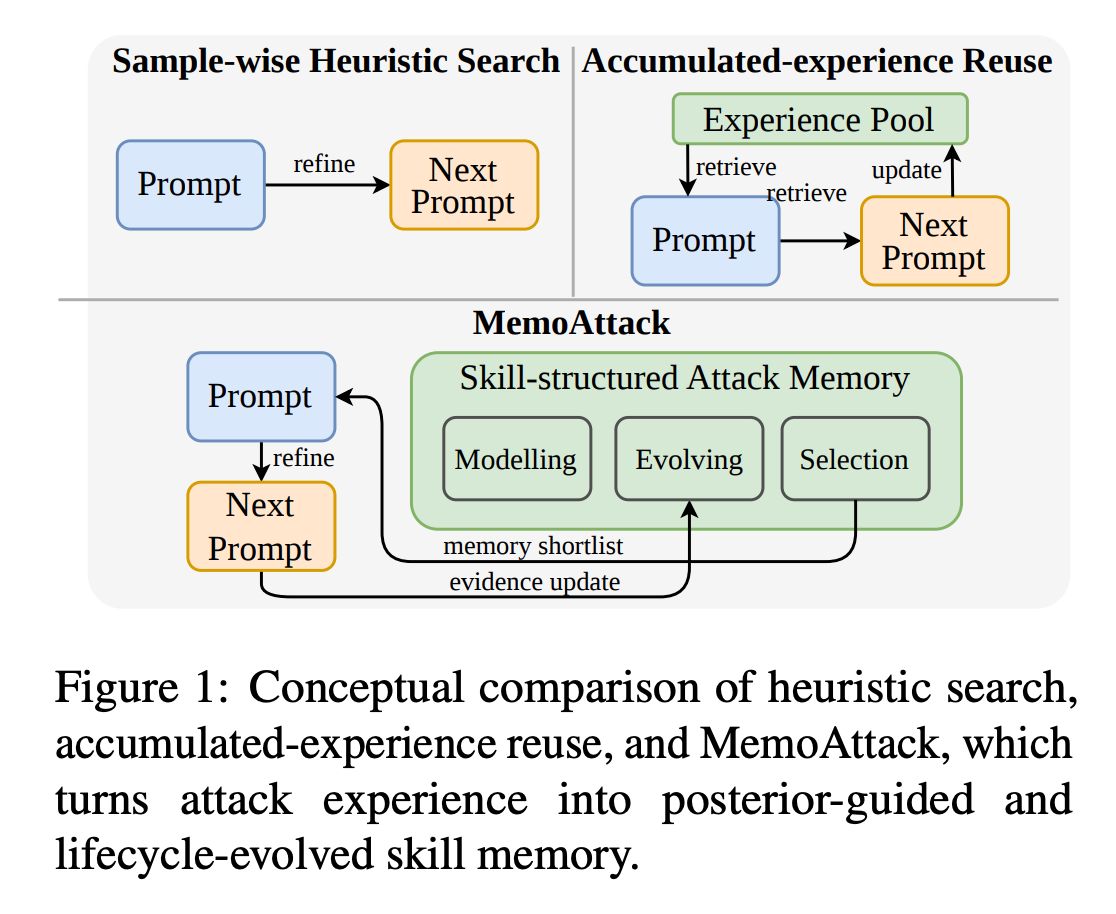
Rather than treating each branch as an isolated prompt trajectory, MemoAttack turns target and evaluator feedback into evidence for reusable skill-structured memory. At each expansion, the
controller selects memory, asks the attacker to realize it as a prompt refinement, evaluates the resulting child, and updates both search progress and memory state.”
Zhang, J., Wang, J., Chen, S., He, Y., Feng, Q., & Yang, Z. (2026). Evolving Skill-Structured Attack Memory Enhances LLM Jailbreaking. arXiv preprint arXiv:2605.29237.
https://arxiv.org/abs/2605.29237
Advancing AI negotiations: A large-scale autonomous negotiation competition
Getting warmer!
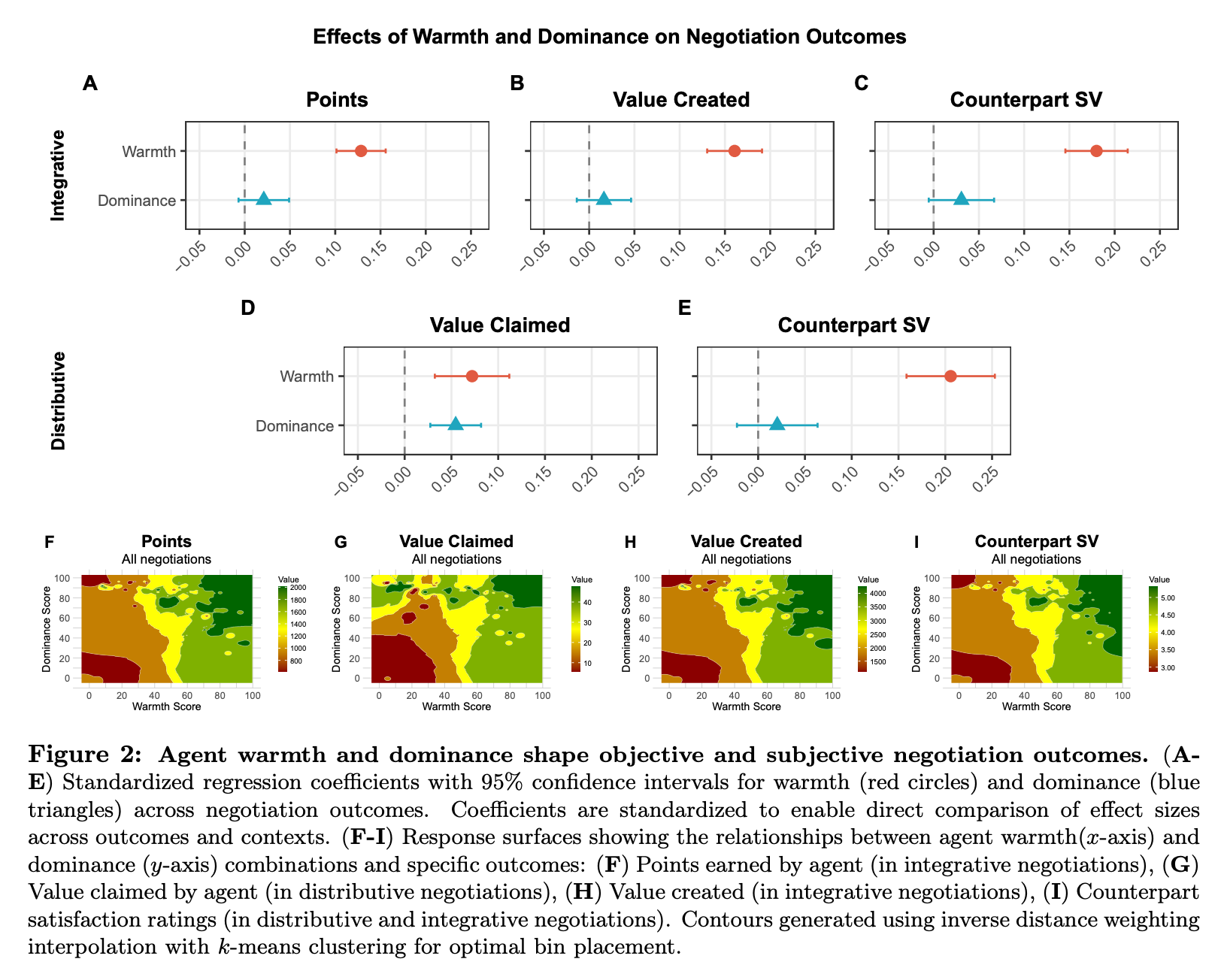
“We conducted an International AI Negotiation Competition in which participants designed and refined prompts for AI negotiation agents. We then facilitated over 180,000 negotiations between these agents across multiple scenarios with diverse characteristics and objectives. Our findings revealed that principles from human negotiation theory remain crucial even in AI-AI contexts. Surprisingly, warmth—a traditionally human relationship-building trait—was consistently associated with superior outcomes across all key performance metrics. Dominant agents, meanwhile, were especially effective at claiming value.”
Our analysis also revealed unique dynamics in AI-AI negotiations not fully explained by existing theory, including AI-specific technical strategies like chain-of-thought reasoning and prompt injection. When we applied natural language processing (NLP) methods to the full transcripts of all negotiations, we found positivity, gratitude, and question-asking (associated with warmth) were strongly associated with reaching deals as well as objective and subjective value, whereas conversation lengths (associated with dominance) were strongly associated with impasses.”
“First, our competition exclusively analyzed one-shot negotiations rather than repeated interactions.”
Vaccaro, M., Caosun, M., Ju, H., Aral, S., & Curhan, J. R. (2026). Advancing AI negotiations: A large-scale autonomous negotiation competition. Proceedings of the National Academy of Sciences, 123(23), e2521774123.
https://www.pnas.org/doi/10.1073/pnas.2521774123
https://arxiv.org/pdf/2503.06416
Can I Buy Your KV Cache?
Why not?
“Right now, across the world, AI agents are repeating the same absurd act: to read one document, they each recompute it from scratch. Every agent re-runs prefill, the most compute-intensive step a large model takes, over identical text, only to rebuild a key–value (KV) cache identical to the one the agent before it just built. The same answer, computed a million times. We make a proposal that is almost offensively simple: compute it once. Let a publisher precompute a document’s KV cache, and let every other agent buy the right to load it and skip prefill.”
“Then the part that matters: where the KV lives. Shipping it fails, because KV is nearly incompressible, so per-load egress costs more than the prefill it saves. Hosting it provider-side,
exactly as production prompt-caching works, removes egress entirely. The size of the prize is set by our measured compute saving: serving one hot 3774-token document to 80M agents costs ∼$1.5M to re-prefill but only ∼$0.03M of reuse compute (49.7× less). The 0.1× cache-read tariff APIs charge passes a 10× discount to users while sitting inside this measured envelope, so the 10× is a floor that the measured ∼50× compute saving clears, and the gap to the physical ∼50× is provider margin: millions of dollars per popular document. We frame the resulting agent-native prefill CDN and leave lossless KV compression and a cross-party payment layer as the open problems.”
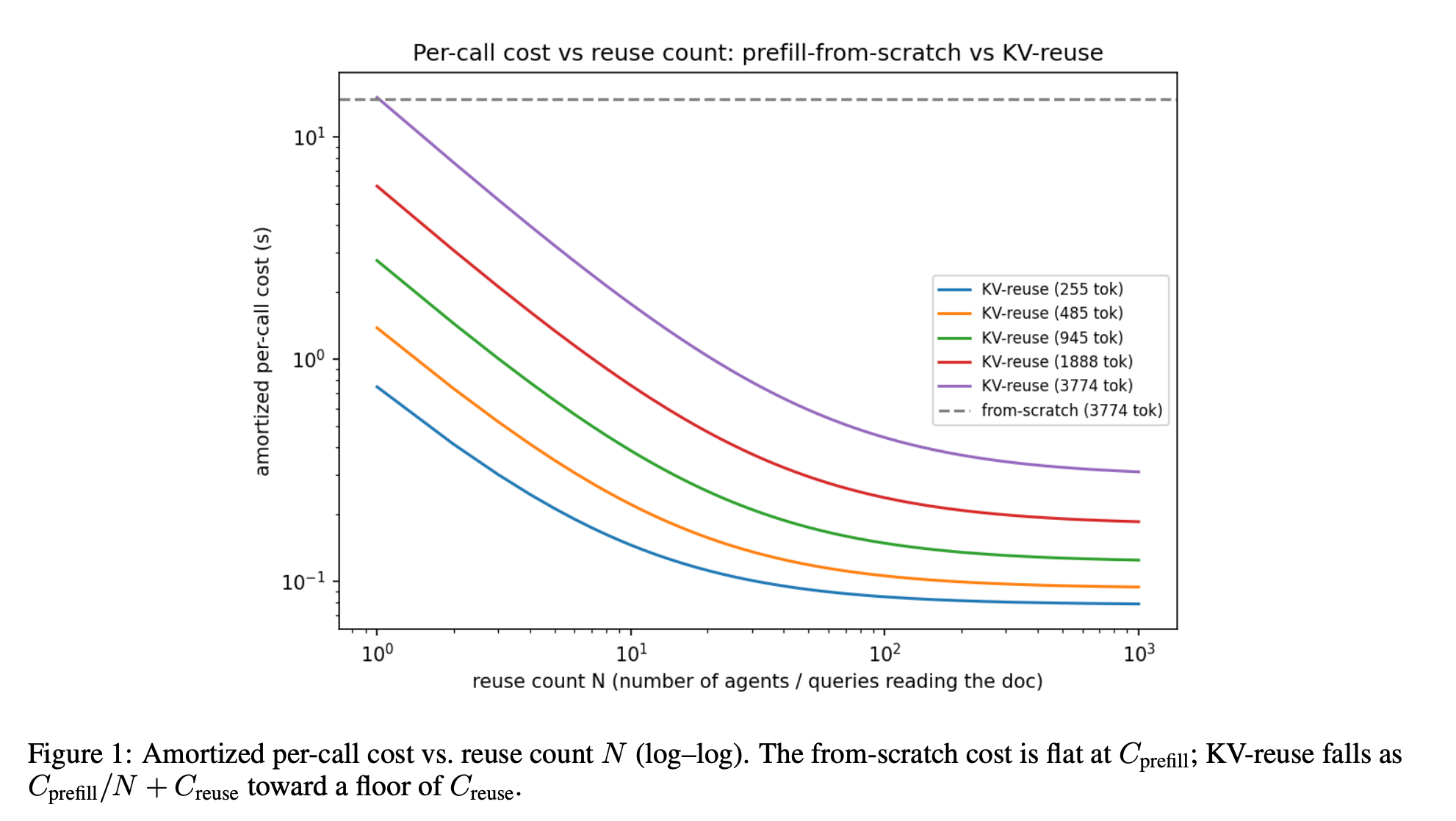
“Together these results motivate an agent-native prefill CDN, a layer that caches computation
rather than bytes, and delineate both the regime where it pays (long, heavily-read content) and the open problems (compression in the loop, fusion, and the cross-party economic layer) that a real deployment must solve.”
Zhang, L. (2026). Can I Buy Your KV Cache?. arXiv preprint arXiv:2606.13361.
https://arxiv.org/abs/2606.13361
Worship me at the office altar: Why narcissistic leaders resist remote work
“The pursuit of authority and glory may be an enemy of flexibility.”
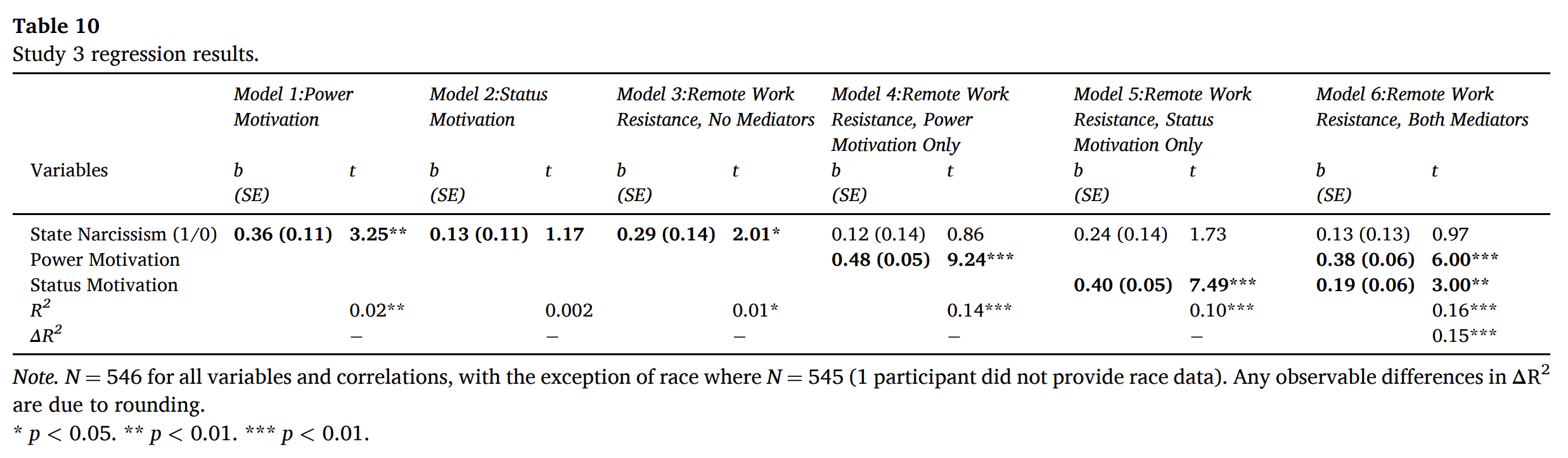
“In Study 1, an archival analysis of 259 Fortune 500 CEOs, unobtrusive measures of narcissism via photo size, signature size, and relative compensation predicted greater resistance to remote work in public statements early in the COVID-19 pandemic. This relationship was partially explained by exploratory proxies for narcissistic leaders’ power and status motivations, contingent on their industry not depending on frontline workers. Study 2, a preregistered three-wave survey with 359 leaders, constructively replicated and extended these results. Leader narcissism predicted resistance to remote work, mediated by power and status motivations—even after controlling for trust, the Big Five, and the remaining Dark Triad traits. In Study 3, a preregistered experiment with 546 leaders, manipulating state narcissism evoked resistance to remote work via power but not status motivation. Our findings extend knowledge about remote work and narcissistic leadership.”
“Narcissistic leaders are likely to resist remote work because it limits their access to power and status.”
Shandell, M. S., Elliott, C. E., & Grant, A. M. (2026). Worship me at the office altar: Why narcissistic leaders resist remote work. Organizational Behavior and Human Decision Processes, 195, 104496.
Reader Feedback
“But Christopher, people on UBI can be dominated by the government. Shouldn’t they be free to be dominated by private enterprises instead?”
Footnotes
I wrapped the first wave of the AI control literature review on Friday. Out of a couple hundred papers across a few sub-areas, I picked out thirty five for the part of the frontier that’s most promising. It includes a few obligatory roots and quite a few leaves.
There are a few sharp cliffs and quite a few fantastic import statements. For instance, an entire branch of Operations Research is simply invoked in the opening section of a belief updating paper, and an entire discipline in aviation safety is imported on a few lines lines in a safety case paper. Deep and delicious.
The great news is that a few authors are aware of the underlying meta-challenges in the field. Not all of those knots are Gordian.
Never miss a single issue
Be the first to know. Subscribe now to get the gatodo newsletter delivered straight to your inbox